


Un générateur de site statique avec interface wyswyg fait en java/quarkus avec live preview et hot reload.
—-
Roq and its themes include several built-in features for SEO, feeds, and discoverability. The base theme provides the essential tags (SEO, favicon, Web Bundler), while the default theme builds on top of it with a full layout, dark mode, sidebar, and more. If you are using either theme, most of these features are already enabled. Configure them through your site index frontmatter or by adding content files.
For details on each feature, see the Base Theme, Favicon, SEO, Analytics, RSS, and LLMs.txt sections in the basics guide.


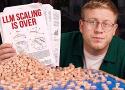
Making an AI better has meant making it bigger for about six years now, and it has worked well enough that most people treat it as a rule, but a recent paper from MIT found the point where it stops. Every LLM has to hold more concepts than it has room for, so it stacks them into the same directions and lets them overlap.
That overlap is called superposition, and it is the reason these models work as well as they do, though it is also the reason they get things wrong. The paper worked out the exchange rate.
Double the width of a model and you halve the errors, which turns out to be most of why bigger models have been better all along. In this video, I break down what a model's internal space actually looks like, why holding more concepts than it has dimensions is what makes models wrong in the first place, and the three separate things that stop this strategy from running forever, only one of which is money.
🧭 Chapters
- 00:00 The Space Inside GPT-1, 2 and 3
- 00:40 How LLMs Actually Learn
- 01:24 More Concepts Than Dimensions
- 01:54 Superposition Explained
- 02:33 Where Interference Comes From
- 03:08 The One Over Width Formula
- 04:16 Why Every Doubling Costs Six Times More
- 05:02 Zipf's Law Locks The Rate
- 06:00 Why The Errors Never Reach Zero
- 06:37 The Ceiling
- 07:18 What Researchers Are Building Instead
📚 Extra resources
- Superposition Yields Robust Neural Scaling (MIT, NeurIPS 2025): https://arxiv.org/abs/2505.10465
- Toy Models of Superposition (Anthropic, 2022): https://transformer-circuits.pub/2022...
- Language Models are Unsupervised Multitask Learners (GPT-2, 2019): https://cdn.openai.com/better-languag...
- Language Models are Few-Shot Learners (GPT-3, 2020): https://arxiv.org/abs/2005.14165
- Training Compute-Optimal Large Language Models (Chinchilla, 2022): https://arxiv.org/abs/2203.15556
- The rising costs of training frontier AI models (Epoch AI, 2024): https://arxiv.org/abs/2405.21015

"Millions of people around the world will soon consider large models ‘hoovering up’ all their work to be an astonishing theft of unprecedented proportions."
Executives working on AI at Microsoft and OpenAI admitted what its critics have been saying all along: Large language models are predatory pieces of technology that have been built on what a Microsoft executive called “an astonishing theft of unprecedented proportions,” and the “largest theft of labor in human history.” An internal Microsoft document said generative AI products have created a “doom loop” that is killing “the entire web.”
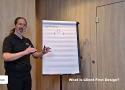
During his Codecamp Romania 2025 Masterclass, J. B. Rainsberger answered some questions about software design.
Here are four lightning talks in which he addresses these topics:
- When not to do TDD and one surprising disadvantage for experienced TDD practitioners.
- How Client-First Design addresses one of the common shortcomings of naively allowing designs to evolve from the ground up.
- Adding safety to refactoring without assuming that adding tests is enough or indeed the best choice.
- Two kinds of refactoring activities and how to communicate the need for each of these to non-programmer members of your project community.
6pour5 ???

L'écologie entrave nos libertés. Et c'est parfaitement normal.
On parle tout le temps d'écologie punitive, pour dénoncer le fait qu'elle serait un châtiment visant à empêcher personnes et entreprises de vivre leur vie comme ils l'entendent.
Mais on se demande rarement si ces entraves à nos libertés sont une particularité de l'écologie. Alors que pas du tout.
Parfois elles viennent de l'État : on appelle ça la loi, qui par nature est coercitive.
Parfois, elles viennent aussi des gens et des acteurs privés par simple volonté de maximisation de son bien-être (beaucoup de gens se retiennent de manger des chips tous les jours, alors qu’ils en ont envie, parce qu’ils savent que cela sera néfaste pour leur santé et leur sex-appeal).
Parfois elles viennent des gens ou des acteurs privés pour d’autres raisons : on appelle ça l'éthique, la morale, la responsabilité.
Est-ce qu'on crie à la punition quand on empêche quelqu'un de prendre le volant après avoir bu ?
On me dira : « ce n'est pas comparable. L’écologie, c’est un effort immédiat pour un bénéfice lointain et collectif, on fait peser la contrainte sur des gens déjà en difficulté, et personne ne se plaint du problème sur le moment".
Sauf que.
-
C’est faux : les bénéfices ne sont pas lointains. 8000 décès supplémentaires cet été par exemple pour des raisons climatiques. Ça, c'est maintenant. Comme les factures d'énergie, l'air des villes, la qualité des aliments pour la santé, la dépendance aux importations.
-
C'est exactement pareil pour l'alcool au volant. La règle ne protège pas d'abord celui qui boit. Elle protège tous ceux qui vont croiser sa route.
-
Le silence des gens n'est pas une preuve d'innocuité. Et là, il faut parler de l'amiante.
On connaît l'histoire dans les grandes lignes :
- on découvre un matériau formidable pour isoler, donc a priori très utile pour la société
- on l'utilise, beaucoup
- La science découvre progressivement que cela fait du mal à la société à d'autres égards, en provoquant cancers et maladies mortelles
- Personne ne se plaint vraiment car les symptômes et les maladies se déclenchent souvent 30 à 40 ans après l'exposition
- Mais après lobbying, débats et jeux d'influence (et pour info, ça a pris BEAUCOUP de temps), l'Etat régule - interdit en l'occurrence - et la société s'adapte.
Est-ce qu’aujourd’hui quelqu’un oserait dire que l’interdiction de l’amiante est une punition pour les acteurs de la construction et les personnes qui ont un logement mal isolé ?
Alors oui, la transition écologique est plus vaste, plus diffuse, plus difficile à substituer que l'amiante.
Mais ça ne change rien à la mécanique.
Personne, aujourd'hui, ne regrette sa liberté de respirer de l'amiante.
Très bientôt, personne ne regrettera d’avoir dû changer de mode de vie ou de business model pour préserver l’habitabilité de nos territoires.
Je sais que c'est un vœu pieux. Mais il est temps d'arrêter de parler d'écologie punitive.


Pérennité Programmée Circulaire
Une démarche industrielle et commerciale d'intérêt général pour une économie robuste et circulaire.
Notre méthode propose de repenser notre manière de concevoir, produire, utiliser et faire durer les biens et les infrastructures. Son ambition est simple : créer davantage de valeur avec moins de ressources, en privilégiant la robustesse, la réparation, le réemploi et la performance d'usage plutôt que le remplacement systématique.
L'Association pour la Pérennité Programmée Circulaire rassemble des entreprises, chercheurs, collectivités, experts, étudiants et citoyens qui souhaitent contribuer à cette transformation. Elle développe des travaux scientifiques, techniques, économiques et juridiques, favorise le dialogue entre les acteurs de terrain et les institutions, et participe à l'élaboration de solutions concrètes pour accompagner l'évolution des modèles industriels, des pratiques économiques et des cadres réglementaires.
Notre approche s'inscrit dans une vision positive de l'avenir : réindustrialiser les territoires, renforcer notre indépendance, préserver les ressources, créer des emplois durables pour construire une économie où la performance économique, l'intérêt général et les enjeux environnementaux se renforcent mutuellement.
Que vous soyez simplement curieux, professionnel, chercheur, étudiant, élu ou représentant d'une organisation, nous vous invitons à découvrir nos travaux,, notre référentiel, à partager vos expériences et à participer à cette dynamique collective au service d'une industrie robuste et circulaire tournée vers le temps long.

- Objectif : Identifier les enjeux éthiques et environnementaux de l'IA
- Durée : 1 heure (adaptable)
- Public cible : élèves, étudiants, enseignants et formateurs
- Âge : à partir de 13 ans

La soif de justice est immense, mais l’ignorance de ce que font réellement les magistrat·es l’est tout autant. Ce documentaire leur donne le temps de nous raconter leur métier, la difficulté de juger, les coulisses de la justice. Dans une période où les juges sont ouvertement méprisés par les politiques, les États de droit gangrenés par des régimes autoritaires, les droits humains ridiculisés et remis en cause, l’enjeu démocratique est important. Cette série va à la rencontre de dix magistrates et magistrats. Les protagonistes ont été choisis parmi les membres du Syndicat de la magistrature, aux positionnements historiquement iconoclastes, fréquemment caricaturés.
coproduction : Sahira films - VraiVrai Films - en partenariat avec Blast
conception et réalisation : Jean-Pierre Bloc
Montage son, création sonore, musique : Béatrice Wick
Supervision technique son : Laurent Dreyer
Étalonnage : Laurent Fénart
Texte d’introduction dit par : Fanny Bloc
Remerciements :
Le Syndicat de la Magistrature
Lise Beaulieu
Thaddée Bertrand
Carole Borne
Mosco Levi Boucault
Frédéric Bourboulon
Pauline Casalis
Marc Daquin
Benjamin Firorini
Monique Fraysse-Gugliemi
Thierry Garrel
Guy Girard
Philippe Hagué
Liza Ignazi
Yannick Kergoat
Sylvie Niderman
Anita Perez
Michaël Phelippeau
Ana Pich
Jérome Prieur
Baptiste Saint-Dizier
Annie Thébaud-Mony


After 25 years with TDD, we are now parting ways. The incremental TDD steps were great for human cognition, but didn't survive the transition to agentic coding.
Test-Driven Development (TDD) has been my default programming mode for 25 years. TDD simply made me a better developer. It’s been invaluable.
However, the time has come to bid farewell to my old companion. Agentic coding is sufficiently different from manual coding, meaning we need to question existing development principles and practices. And TDD didn’t survive my transition into AI-native development: forcing an agent through increments optimized for human cognition negates many of the benefits.
This article reflects on my decades as a TDD practitioner as well as the agentic characteristics that made me abandon the technique. As customary, we’ll start from the beginning.

Depuis quelques années, je vois passer le même conseil : "Une bonne architecture doit rester simple et adaptée au contexte. Un vrai dev ne fait pas d’over-engineering."
Puis : "Pas besoin de microservices, CQRS, Event Sourcing..."
Déjà, mettre microservices, CQRS et ES dans le même sac, c’est comparer l’urbanisme, la circulation et les archives d’une ville : même système, problèmes différents.
Mais surtout : sur quoi vous basez-vous pour déterminer le "bon niveau d’architecture" ? Sur ce que le client vous a raconté au premier atelier de 10mn ?
Un client décrit ce qu’il croit vouloir aujourd’hui, rarement ce que son logiciel devra absorber demain.
Sur mes 3 derniers projets :
- "Il nous faut juste une calculatrice" est devenu un système de pilotage des achats pour 30 M€.
- "Un Excel amélioré" est devenu un outil gérant charges, machines, compétences et turnover.
- "Le planning sera très simple" est devenu une application multisite avec des problèmes de connexion.
Si j’avais dimensionné l’architecture sur le discours initial, j’aurais fait quelque chose de "simple". Tellement simple qu’il aurait fallu tout réécrire quelques mois plus tard. 🤦♂️
Une partie du problème vient du web : on appelle "application" une page avec trois formulaires et une base derrière. Pour un site plaquette, pas besoin de sortir l’artillerie lourde. Mais une vraie application de gestion utilisée par des 10ene ou 100ene de personnes, c’est autre chose : les règles bougent et les exceptions deviennent la norme.
Je vais bientôt avoir 30 ans d’expérience dans la tech : 5 ans dans l’infra, 15 ans sur des logiciels de gestion traditionnels, bientôt 10 ans en CQRS/ES. J’ai eu le temps de voir ce qui tient dans la durée et ce qui casse à la prochaine demande métier.
Le coût d’une architecture ne se mesure pas au nombre de classes créées au démarrage, mais au prix du changement 6 mois, 3 ans ou 10 ans plus tard.
Une architecture trop simpliste produit souvent un effet cocasse : comme le logiciel supporte mal le changement, on essaie d’empêcher le client de changer d’avis. On contractualise, on fige, on ressort le fameux "Mais vous aviez dit que...".
C’est pratique : au lieu de rendre le logiciel adaptable, on essaie de rendre le client immuable.
Et non, CQRS/ES ne servent pas uniquement à l’audit ou à la traçabilité. On peut aussi les choisir parce qu’on accepte une évidence : on ne sait pas encore ce que le métier nous demandera demain.
Bref, considérer qu'une architecture ambitieuse est forcément de l’over-engineering parce que le besoin semble simple aujourd’hui, c’est juste remplacer un dogme par un autre.
C’est comme partir à la guerre sans arme en disant : "YAGNI. On fabriquera les fusils quand quelqu’un commencera à tirer. 🤓 "
Une bonne architecture n’a pas pour but de prédire l’avenir. Elle doit faire en sorte que, lorsqu’il vous donne tort, vous ne soyez pas obligé de tout réécrire.
La simplicité, oui. Le simplisme déguisé en expertise, beaucoup moins.
Humans are hacking AI systems. Humans are hacking with AI systems. But also, AIs are hacking human systems.
They’re finding and exploiting vulnerabilities in computer code, and they’ll soon be doing the same with all sorts of other codes.
For example: the tax code can be hacked. Vulnerabilities are called loopholes, exploits are called tax avoidance strategies, and black hats are called accountants. Similarly, financial markets can be hacked.
So can any system of rules or laws, including democracy itself.
AIs will hack these systems at our request, and they’ll also do this innately, organically – and possibly in ways we don’t immediately see.
We need to consider a world where increasingly sophisticated hacks or our social, economic, and political systems are discovered computer speeds, and then exploited at computer scale and scope.
Right now, our systems of patching these systems operate at a human pace, which won't be good enough.