Une entreprise a déjà tout ce qu'il faut pour que l'IA travaille vraiment pour elle : ses documents, ses process, ses clients, son savoir-faire. Le problème, c'est que tout est éparpillé et que la connaissance se perd.
Depuis 6 mois, je construis des vaults : des espaces de connaissances qui travaillent avec une IA (Claude Code, Codex), pour des services marketing, des services de développement et des entreprises. Je le fais aussi pour moi, tous les jours.
Le 22 octobre à 11h30, je vous montre en live comment ça se construit.
Au programme :
- Le vault : comment structurer le savoir d'une entreprise pour qu'une IA puisse l'utiliser
- Les outils autour : ce que j'ai bâti pour l'alimenter, l'interroger et l'exploiter, dont SPOT, mon companion vocal
- Les cas d'usage : marketing, développement, travail au quotidien
- La méthode : par où commencer, quoi mettre dedans, quoi éviter
Le but : que vous repartiez avec une idée claire de ce que ça apporterait à votre entreprise et de comment le monter.
Posez toutes vos questions en commentaire ou en direct, j'y répondrai!


Un répertoire vivant pour rendre visibles les femmes qui prennent la parole sur la tech et sa nécessaire mixité : intelligence artificielle, cybersécurité, ingénierie, leadership, parité, diversité.
Cherchez un thème, trouvez une voix, découvrez son profil.
Archive internet si jamais le site change de nom de domaine.

Je trouve ça beau et engagé de réprésenter le monde comme il le fait.
TUTO : Créer son parcours d’apprentissage de 15 à 19 ans
OBJECTIF
Rendre les élèves autonomes et responsables dans leur parcours d’apprentissage
Pour les élèves de 15 à 19 ans (ou 1ère année post-diplôme)
Chaque carte propose un tutoriel de progression adapté au quotidien des lycéens : améliorer son organisation, gérer le stress, renforcer sa confiance, mémoriser efficacement, préparer son orientation.
Les élèves découvrent des stratégies concrètes pour apprendre à apprendre et gagner en autonomie.
Une pédagogie centrée sur la personne
Ce jeu de cartes repose sur une idée simple : un élève apprend mieux lorsqu’il comprend ce qu’il fait et pourquoi il le fait.
Les cartes TUTO encouragent la réflexion, la planification et l’action.
Elles favorisent la construction d’un parcours d’apprentissage personnalisé, où chacun avance à son rythme.
Enshitification, extractivisme des données, au secours qu'est devenu le web ? Réapproprions-nous notre vie numérique avec des commun·auté·s.
Depuis que le monsieur orange est à la maison blanche, de plus en plus de personnes se posent la question de leur émancipation des tech états-uniennes.
Retour sur nos expérimentations, de l'errance, au doute en cheminant ensemble, pour s'extraire des gmail, office365, copilot, github et compagnie.
Les options sont nombreuses : Démailnagement avec les CHATONS, Rupture Douce, Tech care, Migration parties, Alternative worlds. Nous vous ferons un retour sur les différentes initiatives auxquelles nous avons contribué. Et peut-être pour vous, l'occasion de faire vos premiers pas vers la liberté ?

Annuaire en français des moyens de financer un projet libre, hors sponsors classiques. Sources citées.
Il existe pas mal d'aides pour financer des projets libres, mais on ne les connaît pas. Je les ai rassemblées ici.
Un annuaire en français pour trouver de quoi financer un projet libre, sans passer par GitHub Sponsors ou Ko-fi. Le logiciel est concerné, mais pas seulement : matériel, contenus, données, tout ce qui est publié sous licence libre.
Chaque fiche donne le montant, la licence demandée, les conditions et la façon de candidater, avec le lien vers la source. Quand je n'ai pas l'info, c'est écrit « non précisé ».
Les montants, conditions et dates changent. Avant de candidater, vérifiez sur la page du programme.


Pour tester la capacité de votre navigateur à vous protéger des fingerprint
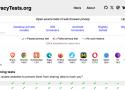
Open-source tests of web browser privacy.

Un petit thread qui vulgarise assez bien LoRa.

Les Service Worker, c’est un peu la potion magique du Web. Un truc qui rend surpuissant, mais que seule une poignée de Gaulois irréductibles connaît et sait mitonner.
Il est temps de démystifier cette fonctionnalité qui est disponible dans tous les navigateurs depuis au moins 2018 !
Dans cette présentation, je vais vous montrer comment les Service Worker nous permettent de nous passer de framework et de toutes les surcouches au navigateur.
Et ce qu’on a à y gagner quand on veux faire des applications web performantes et résistantes à des conditions dégradées et qu’il faut livrer rapidement.
Vous découvrirez les capacités les plus impressionnantes des Service Worker telles que l’API share_target, le fonctionnement hors-ligne natif et d’autres…
Je vous raconterai comment travailler et vivre à bord d’un bateau influence ma vision et m’aide à trouver des solutions originales aux problèmes de l’intermittence

When my new insulin pump’s algorithm confidently delivered what it claimed were hefty doses while my blood sugar soared toward dangerous levels, I faced a terrifying reality: the software was learning, but learning the wrong things.
And it was utterly convinced it was doing a great job.
This isn’t just a medical device story - it’s a wake-up call for our entire industry. As ML and AI become critical infrastructure, they’re exposing fundamental flaws in how we approach quality. We test implementation rather than behaviour, write tests that validate our assumptions rather than challenge them and mistake comprehensive coverage for genuine safety.
Drawing from 15+ years as a software engineering trainer and consultant across multiple industries, I’ll explore how traditional testing blind spots become genuinely dangerous when systems learn and adapt. We’ll examine why teams confuse feeling safe with being safe, how AI amplifies our existing quality gaps and what it really means to test systems that make decisions affecting real lives.
You’ll leave with practical approaches to testing that focuses on impact over metrics, strategies for validating both deterministic and learning systems, and the essential questions every team should ask when software moves beyond just processing data to making decisions that matter.
Because whether it’s a payment system, a recommendation algorithm or life-critical medical software, our users are trusting us to get it right.
The edge cases between the edges
T shaped but untrained in testing
Quelques invitations :
- Create an interaction matrix for your edge cases
- Write Property Based Tests for your constraints
- Implement chaos engineering for your business logic, not just your infrasctucture
- Document and test your "must never" invariants explicitely (ex.
MUST_NEVER.md - For ML systems specifically, test the decision boundaries, not just accuracy
- Build observability into your business logic, not just your infrastructure
- Implement feature flag controls for rule interactions
- Use your Threat Model
- Get to know all the people and what they need
- Ask the uncomfortable question
Would I trust this system... With my wealth ? My Freedom ? My Life ? -> Meeh, or No and you put it out in production, SHAME ON YOU.
AI can write code faster than you. Congratulations to the robots. But if speed of code production is the thing holding your team back, I've got some uncomfortable news: you have much bigger problems and nobody is willing to talk about them.
I've spent over 25 years building software and the bottleneck was almost never the typing. It was the three-week argument about what to build. The requirements that changed after you shipped. The stakeholder who couldn't articulate what they actually needed. The architectural decision nobody wanted to own.
Kent Beck said something that stuck with me: 90% of his skills dropped to zero value, but the remaining 10% got a 1000x multiplier. He's right. And the engineers doing well right now (actually well, not performing wellness for LinkedIn) are the ones who figured out which 10% is theirs. They stopped identifying primarily as "people who write code" and started identifying as people who solve problems. Code just happens to be one of the tools.
If your AI strategy is "write code faster," you're optimising the wrong thing.
Let's talk about what to optimise instead.
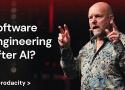
Kent Beck created Extreme Programming, helped pioneer test-driven development, and was the first signatory of the Agile Manifesto. At Prodacity 2026 he talked about what craft means now that a model is writing much of the code.
In this session:
- Why Beck calls it the genie, and why plausible code is not working code
- Features and futures: how every feature you ship burns some of your options for change
- Resting between the notes, and what teams do in the space between features
- One-shot versus iterative, and why spec-driven development is waterfall wearing a new coat
- What he found in formal methods with Lean, and the gap he still cannot bridge
- Effort, output, outcome, mission: a revision Beck worked out during Day 1, and what Goodhart's law does to any measure taken too early
Recorded live at Prodacity 2026 in Nashville. Prodacity is Rise8's 3-day training event for GovTech leaders delivering mission-critical software.

La guerre se cache derrière les voitures électriques, les ordinateurs et les téléphones, explique David Maenda Kithoko dans cet entretien. Une exploitation sanglante des ressources du Sud, dénonce cet enseignant et militant.
Il a vécu une enfance heureuse mais courte au bord du lac Tanganyka, en République démocratique du Congo (RDC) avant que les balles et la guerre fassent fuir la famille vers le Rwanda. Là, la répression l’a obligé à fuir encore, conduisant l’adolescent et les siens vers Mayotte, où sa famille s’est heurtée au racisme. Avant de découvrir la France métropolitaine — et la vie dans la rue, parce qu’il n’y avait pas d’asile.
Ce parcours, c’est celui de David Maenda Kithoko, un parcours d’exil comme des milliers d’autres. Une histoire, aussi, comme on en entend peu. Mais David a forcé le destin, il a fait des études, il a réussi Sciences Po Lyon, et enseigne maintenant à l’université Lyon II et travaille dans une société d’économie sociale et solidaire. Il anime aussi Génération lumière, une association qui se bat pour faire reconnaître le poids des mines dans les guerres, et notamment en RDC.
Car derrière chaque téléphone, chaque ordinateur, chaque voiture électrique il y a des parcelles de métaux, du cobalt, du coltan du cuivre, et derrière les métaux, il y a du sang, la guerre, les morts, la misère. C’est ce que nous explique David Maenda Kithoko dans cet entretien, où il ouvre la voie d’un monde où la sobriété conduirait à la paix et à des liens renouvelés entre humains.

Intro : Qu'est-ce qu'une adresse IP