Intro : Qu'est-ce qu'une adresse IP


Over the last several months I have been tracking AI guys trying to create vibe coded clones of popular apps, especially Adobe’s apps which have always been the most pirated apps since the 90s.
Guides très synthétique
pour pas oublier des trucs dans notre support
WCAG simplifié, filtré pour les devs



Comment mesurer précisément l'impact environnemental d'une application ?
Le Référentiel par Catégorie de Produit (RCP) des applicatifs numériques, publié sur la librairie de l'ADEME, répond à cette question.
Co-écrit par l'Alliance Green IT, l'ADEME, le CNRS, Inria et l'Observatoire des impacts environnementaux du numérique, il fournit la méthode à respecter pour réaliser l'analyse du cycle de vie (ACV) d'un applicatif numérique.
Concrètement, ce référentiel permet de :
- mesurer l'empreinte d'un applicatif sur l'ensemble de son cycle de vie, sur la base d'une unité fonctionnelle commune :
- évaluer séparément les contextes terminaux, réseau et hébergement, puis consolider les résultats ;
- comparer les applicatifs sur une base partagée et piloter la réduction de leurs
...
Le RCP complète le RGESN : le RGESN évalue les moyens mis en œuvre (approche qualitative), le RCP mesure un impact chiffré (approche quantitative).
Ensemble, ils posent les fondations d'un langage commun pour un numérique
Pour aller plus loin, revoyez notre webinaire co-organisé avec Alt IMPACT, avec les interventions de l'ADEME, du CNRS, d'Inria, de CtrI-a et de l'AGIT France. En 1h30, il présente le nouveau RCP Applicatif et la V2 du RCP Services Numériques.
À ne pas manquer dans le replay :
29:11 : le RCP Applicatif, son unité fonctionnelle et ses contextes ;
1:00:42 : RGESN et RCP, un langage commun ;
1:09:33 : les questions-réponses.
Le replay est ici : https://alliancegreenit.org/replay-webinaire-rcp-applicatif-et-services-numeriques-v2
Le référentiel est gratuit. Lien de téléchargement en premier commentaire.
#NumeriqueResponsable #GreenIT #ACV #Ecoconception
#SobrieteNumerique

Why care
- Classless frameworks are smaller because they don’t mention classes, and don’t pile custom widgets.
- Classless is easier because you don’t need to look up the docs to find out which class does what. You just use standard HTML. Is the class “btn” or “button” in this one?
- Classless start you off prettier than the mega-ui-frameworks because they’re designed for the plain html scenario.
- The downside is you might have to bring in some of your own widgets. E.g. a shape-shifting menu bar. Are you sure you need a shape-shifting menu bar?
- Classless frameworks are not just for communists. But I imagine communists would enjoy them even more.

Vibe code cleanup
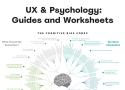
ressources sur les biais cognitifs
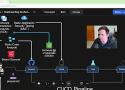
Shift security left : Dev idea , Dev env, staging env, prod env
faster feedback, lest cost,
- CI/CD Pipeline
- SCA : Static Code Analysis (scan without running code)
- SCA : Static Composition Analysis
- SAST : Static Application Security Testing
- Secret Scanner
- precommit: lancer analyses au plus tôt
- Sbom : Software Bill of materials (liste des dépendances avec versions) : ex quand une vulnérabilité est découverte on peut find grep dedans
- DAST : Dynamic Application Security Testing (SQL injection, xss , session hijacking, authenticaion,...) (ex. Owasp Zap tool)
- Image Scanners
- Alpine image: less attack surface (but still OS)
- Distroless images: even less tools (usually image providers give a lot more infos such as Sbom, Security infos, ...)
https://edu.chainguard.dev/chainguard/chainguard-images/getting-started-distroless
docker scout cves $APP_NAME:APP_VERSION --output vuln.report

docker scout cves $APP_NAME:APP_VERSION --only-severity critical --exit-code

docker scout sbom --output $APP_NAME.sbom $APP_NAME:APP_VERSION
-
Generate vulnerability report (and notify the team)
-
Fail CI on vulnerability threshold
-
Sign commit
-
Sign image
Tandis que les frasques et les manœuvres des patrons de la tech étasunienne concentrent l’attention, en France aussi des forces s’affirment, décidées à faire de la puissance technologique un programme autoritaire. Des think tanks aux fonds d’investissement en passant par les salons où se côtoient dirigeants politiques et dirigeants d’entreprises, le projet « technofasciste » y prend racine sur un terreau rendu fertile par plusieurs décennies de durcissement sécuritaire, d’extension de la surveillance numérique et de mise sous contrôle des populations désignées comme menace.
Devant cette sommation technologique et son déploiement accéléré, il est vain de croire que l’on pourrait simplement tourner la tête, voire sauter du train. Mais il est urgent de prendre la mesure des bascules en cours et d’identifier ceux qui sont aux commandes pour les empêcher de nous mener dans le mur ; comme il est urgent de défaire les impasses stratégiques où une part de la technocritique s’est laissée enfermer afin de rouvrir la possibilité d’une critique progressiste et d’une maîtrise démocratique des choix technologiques.
Irénée Régnauld
Irénée Régnauld est essayiste, sociologue et doctorant à l’EHESS et à l’INSA Rennes. Spécialiste des implications sociales du numérique, il tient depuis 2014 le blog « Mais où va le web ? » et a cofondé en 2017 l’association Le Mouton Numérique. Il a récemment publié, avec Arnaud Saint-Martin, Une histoire de la conquête spatiale. Des fusées nazies aux astrocapitalistes du New Space (2024).

The single thing I need my task systems to do, from a simple shopping list to complex project management software, is to answer the question "What should I be doing RIGHT NOW?"
In this video I'll evolve 10 years of optimisation in 10 minutes.
Article and links here https://www.namtao.com
Le point sur la nouvelle vague d’alarmisme et les appels à la régulation de l'IA formulés par les principaux acteurs.
Tout a commencé par le piratage informatique du site Hugging Face par des IA agentiques1 ayant échappé au contrôle d’OpenAI. Rapidement, ses concurrents Méta, Anthropic et le chinois Moonshot AI ont affirmé avoir provoqué des incidents similaires lors des phases de test de leurs propres programmes.
...

Un nom pour dire dev
À l’ère des agents, notre avantage ne viendra peut-être plus de notre capacité à produire plus vite ce que nous savons déjà, mais de notre capacité à apprendre plus vite ce que nous devons réellement construire.
Nous explorerons progressivement cette tension afin de proposer une démarche permettant de concilier la richesse de la modélisation métier avec la vitesse et les capacités du développement agentique.