Audit native grandes lignes

Skill pour deslopiser UK UI web


Discussion critique sur la CNV
Scalable, interactive data visualization
Mosaic is an extensible framework for linking databases and interactive views.


A key principle of local-first is building technology that gives users agency. At Habitat, we believe this cannot be achieved without data agency, which encompasses all of data access, sovereignty, and legibility. We are building a platform to give communities and organizations data agency, built upon AT Protocol. This talk explores each aspect above through case studies and examples from our earliest users.
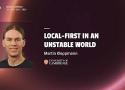
Local-first aims to empower users. But it also does something more systemic: it improves systems' resilience against things going wrong. In a world where geopolitical tensions are increasing and long-standing certainties are upended, decentralisation and resilience become increasingly important. This talk explores why local-first software is moving from a personal nice-to-have to a strategic must-have, and what this means for our community.

A nice example of multiple Software Craft tactics :
- Test Driven Development
- Refactoring
- Always Green Refactoring
- Micro commits
- Baby steps
- Intentional commit naming
emilybache added 30 commits 2 years ago
Rendez-vous au “café 109” le 13 mars 2026 à Orléans
Nous organisons une journée de conférence et débats pour penser la matérialité des services numériques et agir pour des infrastructures limitées et soutenables.
Cet journée s’adresse aux professionnel·le·s du numérique, étudiant·e·s, militant·e·s associatifs, décideur·euse·s et organisations qui dépendent d’infrastructures numériques.
📍 Salle 109, 108 rue de Bourgogne, à Orléans
🔈 Et en direct en ligne en audio
🎟️ Plusieurs tarifs (réduit, normal ou soutien)
👉 Inscription en ligne sur Helloasso
Au programme
| axe | horaire | intervenant.e.s | sujet |
|---|---|---|---|
| 8h30 - 9h15 | Accueil - café | ||
| TRANSMETTRE | 9h15 - 10h00 | Perrine, Oriane, Quentin | Une méthodologie de désescalade numérique |
| TRANSMETTRE | 10h00 - 11h00 | Fabrice Flipo | Changer les modes de vie autour du numérique |
| PAUSE | |||
| TRANSMETTRE | 11h - 12h | Rania Youssef& Le nuage était sous nos pieds | Extractivisme et colonialisme à toutes les étapes de la chaîne de production des services et outils numériques, luttes locales - Rania interviendra en anglais- |
| 12h15 - 13h30 | PAUSE REPAS | ||
| TRANSMETTRE | 13h30 - 14h30 | Perrine, Oriane, Quentin | Impact des infrastructures : du constat à la mise en action. |
| DÉMANTELER | 14h30 - 15h15 | Alexis Nicolas | Vers un protocole de dénumérisation ? |
| PAUSE | |||
| 15h30 - 16h15 | Stéphane Crozat & Quentin Duchemin | Lowtechisation, permacomputing et désescalade numérique | |
| MAINTENIR | 16h15 - 17h | Arnaud Levy | Comment la Gaité Lyrique est sortie des datacenters ? |
| 17h - 19h | Partages | ||
| 19h | Projection documentaire | Machines In Flames - L’histoire oubliée du Comité Liquidant ou Détournant les Ordinateurs, actifs dans les 80’ à Toulouse |
En parallèle du programme de conférences/débats au café 109, et en partenariat avec Xul - La foire d'empoigne de l'art contemporain, une salle en accès libre sera dédiée à l'appropriation du sujets de la matérialité des infrastructure par l'art avec notamment :
- Richard Hanna sera là pour présenter le jeu vidéo Trois-Rivières
- une datafoire sur un ordinateur de 2002
- un espace lectures avec des ressources sur les sujets de la matérialité du numérique, de la lowtechisation du numérique …

Prime au vice
Fast fashion
Cercle vicieux : plus on est pauvre plus on achete fast fashion, plus fast fashion plus on est pauvres
Fast fashion : pertes emplois, pertes cotisations: école, santé, retraite
Alors on fait quoi ?
on met des règles.
Elle a compris une chose que beaucoup refusent d'admettre : bien faire dans son coin ne suffit pas.
Cette semaine, une voix m'inspire : celle de Julia FAURE.
Ingénieure agronome de formation, elle co-fonde en 2018 la marque de vêtements Loom.
Des vêtements pensés pour durer.
- Fabriqués en France et au Portugal.
- Sans usines à l'autre bout du monde.
- Sans matières bourrées de produits chimiques.
- Sans humains exploités.
On pourrait juste y voir une belle histoire d'entrepreneure vertueuse?
Sauf qu'elle a eu l'honnêteté de reconnaître une chose difficile.
Les marques éthiques ne vont pas, à elles seules, faire reculer la fast fashion.
Le constat est brutal :
- Les marques responsables se partagent 1% du marché.
- 7 vêtements sur 10 vendus en France sont du low-cost.
Et pendant ce temps, l'industrie textile pollue toujours plus.
Alors au lieu de se contenter de vendre ses pulls et de dormir "tranquille".
Elle a choisi autre chose. Elle a compris que sa voix seule, dans son coin, ne pesait rien. Mais que des centaines de voix ensemble pouvaient peser lourd.
C'est comme ça qu'est né « En Mode Climat » : un mouvement d'entreprises qui ne défend pas ses intérêts à court terme, mais qui se bat pour changer les règles du jeu.
Un anti-lobby, en quelque sorte.
Son combat tient en trois demandes claires :
- Produire moins de vêtements neufs.
- Relocaliser l'industrie textile.
- Développer la réparation.
Et ça marche : ce plaidoyer leur a ouvert les portes des ministères et des débats sur le textile en France.
Et elle ne s'est pas arrêtée là.
Depuis 2023, elle co-préside le Mouvement Impact France, ce qu'on surnomme parfois le « MEDEF écolo ».
Le combat, cette fois, dépasse le textile.
Il s'agit de rassembler tous les entrepreneurs qui refusent de choisir entre profit et planète, pour peser sur les règles de l'économie tout entière.
Elle a compris une chose que beaucoup refusent d'admettre : bien faire dans son coin ne suffit pas....plus
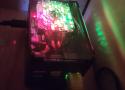
Ça y est, j'ai déposé un Raspberry Pi hors site chez mes parents, avec plein de lumières, comme ça ils peuvent se rendre compte immédiatement quand ils ont débranché la mauvaise prise pour passer l'aspirateur 🔌
Chaque nuit, le Raspberry qui est suspendu à du fil de pêche sous une table de mon salon lui envoie une copie incrémentale de mes données. Il peut seulement y ajouter, il ne peut rien y effacer.
La règle 3-2-1 propose 3 copies de vos données, sur 2 supports différents, dont 1 hors site. Elle protège de désastres comme un incendie, un cambriolage, ou un disque qui lâche. Mais ça ne dit pas qui a le droit de modifier ou supprimer ces copies.
Un montage courant, c'est un rsync ou une copie vers un NAS distant. La machine sauvegardée s'y connecte avec un compte qui peut écrire, mais aussi supprimer. Un rançongiciel qui prend la main sur la machine récupère ce compte, et il peut effacer les sauvegardes ou tout chiffrer.
Chez mes parents, rest-server, le serveur de dépôt de restic, tourne avec --append-only. La doc résume ainsi le principe : il "permet de créer de nouvelles sauvegardes mais empêche de supprimer ou de modifier les existantes". Si mon serveur est compromis, l'attaquant pourra ajouter des snapshots, mais il ne pourra pas effacer ou modifier ceux qui sont déjà présents.
Veeam, un éditeur de logiciels de sauvegarde, a d'ailleurs ajouté deux chiffres à la règle, ça donne 3-2-1-1-0.
🔹 1 copie hors ligne, isolée du réseau ou immuable
🔹 0 erreur quand on vérifie que les sauvegardes se restaurent
Et vous, vous gérez comment vos sauvegardes ?
Moteur de recherche qualitatif petit, indépendant , do it yourself, qui n'exige pas de cookies ou d'inscription à newsletter