
"Millions of people around the world will soon consider large models ‘hoovering up’ all their work to be an astonishing theft of unprecedented proportions."
Executives working on AI at Microsoft and OpenAI admitted what its critics have been saying all along: Large language models are predatory pieces of technology that have been built on what a Microsoft executive called “an astonishing theft of unprecedented proportions,” and the “largest theft of labor in human history.” An internal Microsoft document said generative AI products have created a “doom loop” that is killing “the entire web.”


- Objectif : Identifier les enjeux éthiques et environnementaux de l'IA
- Durée : 1 heure (adaptable)
- Public cible : élèves, étudiants, enseignants et formateurs
- Âge : à partir de 13 ans
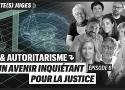
La soif de justice est immense, mais l’ignorance de ce que font réellement les magistrat·es l’est tout autant. Ce documentaire leur donne le temps de nous raconter leur métier, la difficulté de juger, les coulisses de la justice. Dans une période où les juges sont ouvertement méprisés par les politiques, les États de droit gangrenés par des régimes autoritaires, les droits humains ridiculisés et remis en cause, l’enjeu démocratique est important. Cette série va à la rencontre de dix magistrates et magistrats. Les protagonistes ont été choisis parmi les membres du Syndicat de la magistrature, aux positionnements historiquement iconoclastes, fréquemment caricaturés.
coproduction : Sahira films - VraiVrai Films - en partenariat avec Blast
conception et réalisation : Jean-Pierre Bloc
Montage son, création sonore, musique : Béatrice Wick
Supervision technique son : Laurent Dreyer
Étalonnage : Laurent Fénart
Texte d’introduction dit par : Fanny Bloc
Remerciements :
Le Syndicat de la Magistrature
Lise Beaulieu
Thaddée Bertrand
Carole Borne
Mosco Levi Boucault
Frédéric Bourboulon
Pauline Casalis
Marc Daquin
Benjamin Firorini
Monique Fraysse-Gugliemi
Thierry Garrel
Guy Girard
Philippe Hagué
Liza Ignazi
Yannick Kergoat
Sylvie Niderman
Anita Perez
Michaël Phelippeau
Ana Pich
Jérome Prieur
Baptiste Saint-Dizier
Annie Thébaud-Mony


Humans are hacking AI systems. Humans are hacking with AI systems. But also, AIs are hacking human systems.
They’re finding and exploiting vulnerabilities in computer code, and they’ll soon be doing the same with all sorts of other codes.
For example: the tax code can be hacked. Vulnerabilities are called loopholes, exploits are called tax avoidance strategies, and black hats are called accountants. Similarly, financial markets can be hacked.
So can any system of rules or laws, including democracy itself.
AIs will hack these systems at our request, and they’ll also do this innately, organically – and possibly in ways we don’t immediately see.
We need to consider a world where increasingly sophisticated hacks or our social, economic, and political systems are discovered computer speeds, and then exploited at computer scale and scope.
Right now, our systems of patching these systems operate at a human pace, which won't be good enough.
Le texte que vous vous allez découvrir est le fruit de mon travail de veille, de recherche et de vulgarisation quasi-quotidien depuis plus d'un an.
Je le partage dans l'espoir de proposer un modèle unifié, politiquement exploitable pour :
Comprendre la bulle de l'IA et le système financier, leurs mécanismes de fonctionnement et d'effondrement, et leurs conséquences
Nous organiser et mener des changements systémiques afin que cela n'arrive plus
Il commence par une synthèse du contexte : évènements des derniers mois, acteurs, exemples… Ensuite, il dézoome progressivement en répondant à des questions successives sur les notions d'éclatement et d'infrastructure, puis sur le déroulé de l'éclatement de la bulle pour arriver à la rupture du système financier et à ses conséquences possibles sur nos vies.
La dernière partie propose des outils pour commencer à nous positionner individuellement et nous organiser collectivement afin de changer les choses.
Toutes les notions importantes sont (normalement) expliquées et contextualisées au fur et à mesure.
N'hésitez pas à utiliser le sommaire pour vous repérer, bonne lecture !
Note : si vous avez découvert et apprécié ce texte dans sa forme première sur Mastodon, sachez que vous avez ici affaire à une version retravaillée en profondeur, avec notamment une nouvelle section sur la notion de redondance dans le système financier et le rôle de l'inflation comme carburant de la crise.

These two examples are not isolated. This kind of crisis is happening more and more often, in the world’s degrading social, political, and economic conditions, as our peers suffer from depression, anxiety, burnout, and more. Mental health issues and the ensuing harassment, shame, and stigma disproportionately affects neurodivergent and queer people, who often become the subject of gleeful humiliation by bigots deliberately trying to exacerbate their struggles. Crises happen to “problematic” people, too; often in such cases people who would otherwise consider themselves allies of social justice can find in a problematic person a convenient excuse to participate in these gleeful humiliation rituals themselves.

💫 Pour tout ceux qui travaille sur le #RIA (#AIAct), cette mise à jour est pour vous !
🔄Le texte ayant évolué durant l'été, notamment avec les modifications introduites par l’#Omnibus, cette version a été enrichie et mise à jour pour en tenir compte.
📅 À retenir notamment : le calendrier d’application évolue, avec un report au 2 décembre 2027 pour les obligations relatives aux systèmes d’IA à haut risque, sous réserve des conditions prévues par le texte.
Comme la première version, ce document vise à faciliter la lecture et l’appropriation du règlement, en rassemblant dans un même support le texte, ses définitions, les considérants, les différentes mesures d’application ainsi que des ressources complémentaires.
Deux ans après sa première publication, l’objectif reste le même : rendre un texte complexe plus accessible et plus exploitable.
📑 La nouvelle version est disponible sur #HAL : https://lnkd.in/eH4MQeAs et vous trouverez le sommaire, ci-dessous.
Chat bot local open source de l'état suisse

« Ils me rendent des copies parfaites. Et à l'oral, ils ne savent pas les expliquer. »
Cette phrase, je l'ai entendue à chaque réunion de pré-rentrée cette année. Formulée autrement selon les intervenants, mais toujours avec le même agacement 😬
Alors soyons clairs sur un point : je ne suis pas contre l'IA. En cours, en TP, elle a sa place. Elle débloque, elle explique autrement, elle fait gagner du temps. Je ne l'interdis pas et je n'ai aucune envie de l'interdire.
Mais pendant une évaluation, la question n'est plus la même. Une évaluation sert à mesurer ce qu'un apprenant sait faire. S'il copie-colle, elle ne mesure plus rien du tout ❌
Et surtout, elle devient injuste. Ceux qui ont révisé, qui butent vingt minutes sur un exercice, et qui se retrouvent notés à côté d'une réponse produite en huit secondes. Ceux-là, on les décourage. C'est le vrai coût, et il est rarement chiffré dans les discussions sur l'IA.
Donc j'ai construit quelque chose pour mettre un terme à tout ça.
Un boîtier de la taille d'un livre de poche qui crée un réseau Wi-Fi le temps de l'épreuve.
→ Les apprenants s'y connectent. Rien à installer sur leurs machines, aucun réglage, aucun logiciel à accepter.
→ Ils s'identifient eux-mêmes, sur une page web dont j'écris l'adresse au tableau. Pas d'appel, pas de liste à cocher, et rien de caché : ils voient exactement ce que je vois d'eux.
→ Les services d'IA générative ne répondent plus. Le réseau refuse simplement de les joindre, une trentaine de domaines : ChatGPT, Gemini, Claude, Perplexity, et les outils de reformulation, qu'on oublie toujours alors que ce sont eux qui servent le plus.
→ Un écran me dit en direct qui est connecté et qui vient de quitter le réseau.
→ À la fin, un rapport horodaté, archivé, imprimable, lisible plusieurs semaines après si besoin.
Si vous êtes formateur, responsable pédagogique ou centre de formation et que ce problème vous parle, je suis curieux d'en discuter. Le montage est transposable ailleurs que chez moi, et je sais maintenant exactement ce qu'il demande.
(La capture du dashboard en commentaire est une démonstration : la séance, les noms et les appareils sont entièrement fictifs.)
Les chiffres clés · 2026
IA & Environnement
Les datacenters consomment déjà autant d'électricité que la France. 40 chiffres vérifiés sur ce que l'IA consomme et rejette, chacun relié à sa source.
AI adoption strategies are overwhelmingly framed around productivity and efficiency. But that lens misses a critical constraint: the psychological cost of working with AI.
New research shows that “psychological debt”—a cluster of six negative effects including cognitive offloading, reduced autonomy, diminished competence, weakened social connection, credibility loss, and identity threat—can materially suppress adoption and erode ROI. In a survey of 1,200 employees across sectors, higher psychological debt was strongly associated with lower AI usage, less sophisticated application, and greater avoidance—even when employees acknowledged AI’s value.
Early-career workers were especially affected, suggesting that AI may be undermining skill development at precisely the stage when it matters most.
The implication is clear: AI adoption is not just a technology deployment challenge but a human one. Companies that ignore motivation risk investing in tools employees won’t fully use. The solution is to deliberately design human-AI interactions—introducing friction to preserve thinking, ensuring explainability and autonomy, reinforcing human expertise, and normalizing AI use socially and culturally.
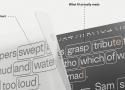
Scrambler font to trick AI
James Prather, Brent Reeves, Juho Leinonen, Stephen MacNeil, Arisoa S. Randrianasolo, Brett Becker, Bailey Kimmel, Jared Wright, Ben Briggs
Novice programmers often struggle through programming problem solving due to a lack of metacognitive awareness and strategies. Previous research has shown that novices can encounter multiple metacognitive difficulties while programming. Novices are typically unaware of how these difficulties are hindering their progress.
Meanwhile, many novices are now programming with generative AI (GenAI), which can provide complete solutions to most introductory programming problems, code suggestions, hints for next steps when stuck, and explain cryptic error messages. Its impact on novice metacognition has only started to be explored.
Here we replicate a previous study that examined novice programming problem solving behavior and extend it by incorporating GenAI tools. Through 21 lab sessions consisting of participant observation, interview, and eye tracking, we explore how novices are coding with GenAI tools.
Although 20 of 21 students completed the assigned programming problem, our findings show an unfortunate divide in the use of GenAI tools between students who accelerated and students who struggled.
Students who accelerated were able to use GenAI to create code they already intended to make and were able to ignore unhelpful or incorrect inline code suggestions.
But for students who struggled, our findings indicate that previously known metacognitive difficulties persist, and that GenAI unfortunately can compound them and even introduce new metacognitive difficulties.
Furthermore, struggling students often expressed cognitive dissonance about their problem solving ability, thought they performed better than they did, and finished with an illusion of competence. Based on our observations from both groups, we propose ways to scaffold the novice GenAI experience and make suggestions for future work.
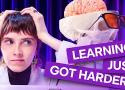
Clara explores the concept of metacognitive awareness, the role it plays in learning, common traps in your thinking, and how using LLMs affects it in surprising ways.
Papiers de recherche :

AI transparency sounds reasonable. But what happens when AI detection and watermarking systems cannot tell the difference between someone generating work with AI and a disabled person using AI as assistive technology?
In this video, I explain why AI watermarking and the EU AI Act have me concerned as a blind accessibility professional, app developer, person with ADHD, and heavy AI user.
AI helps me organize my thoughts, work with inaccessible information, understand images, read documents with OCR, create content, and communicate more effectively. For many disabled people, AI can function as assistive technology.
So what happens when a machine-readable signal simply says that AI was involved?
What happens when a blind person uses AI-powered OCR to read an inaccessible document?
What happens when someone with ADHD or dyslexia uses AI to organize their own thoughts?
What happens if an employer, school, publisher, or automated system sees an AI signal and assumes that person did not actually do the work?
I support transparency and protections against malicious uses of AI. But “AI was involved” does not automatically mean “AI did the work.”
Disabled people need to be part of this conversation while these policies and technologies are being designed — not after they create another barrier.
What do you think? Could AI watermarking unintentionally discriminate against disabled people?
If you think policymakers, AI companies, developers, educators, employers, and accessibility professionals need to hear this perspective, please share this video.
I usually do not originate posts. As a public service I thought I would post a few studies, most published and others just articulated on the web, about the effectiveness of AI.
Ford rehires humans after finding AI can't deliver quality
https://lnkd.in/eCi7wyE9, The BBC, Jun 2026
"Corporate leaders are starting to question whether soaring AI spending is delivering meaningful returns," https://lnkd.in/exb3VncU
Uber's COO says it's getting harder to justify the money spent on AI tokenmaxxing. https://lnkd.in/giMSMnYC, Business Insider.
Microsoft reports are exposing AI’s real cost problem: Using the tech is more expensive than paying human employees, https://lnkd.in/g3cq95pv, Fortune magazine.
Use of ChatGPT reduces brain activity by up to 55% in college essay composition: https://lnkd.in/eHfTNcwX, Cornell University, Jun 2025.
AI dilutes your ability to retain and recall information. ChatGPT: The cognitive effects on learning and memory, https://lnkd.in/e95ZCR2b, Chinese researchers
Doctors' use of AI erodes their own ability to diagnose tumours. "Endoscopist deskilling risk after exposure to artificial intelligence in colonoscopy: a multicentre, observational study."
https://lnkd.in/egGaQgAT. The Lancet digest of medical journal publications.
AI dilutes critical thinking: "AI Tools in Society: Impacts on Cognitive Offloading and the Future of Critical Thinking." https://lnkd.in/ePjS3UZG, Sept. 2025, SBS.
Devs predicted they would be 24% better but in fact were 19% worse: the METR study. https://lnkd.in/e-5SGtwW
AI prompters may be productive, but at the cost of quality: maintenance and repair costs more than eat the advantages. Scientific American. https://lnkd.in/eHsShjzv.
AI-generated "workslop" is measurably destroying productivity. Harvard Business Review. https://lnkd.in/eUyx5t5K
Microsoft found that Copilot 1. made developers feel they were getting more done, 2. gave little to no productivity gain, and 3. increased bugs. https://lnkd.in/ec6ZqpJ8. The BBC, June 2026
Bain & Company research finds AI causes a 10% to 15% hit. https://lnkd.in/e3V87F3i
For the layperson: AI chatbots could be making you stupider. https://lnkd.in/eEVFqJi2, 20 Apr 2026. BBC News.
Cornell University. Scientific American. Harvard Business Review. Microsoft. So many of the positive reports come from sources we should view as untrustworthy, given the posters' prospects of benefiting if AI actually helps.