
Everyone is diving headfirst into the AI pool. The problem is they're diving into the shallow end. LLMs are being packed into every nook and crannie, mostly places nobody wanted it or asked for it. I'm going to be taking a baseball bat to LLMs - their hallucinatory nature and the extra instructions we're saddled with we don't get to see.. I'll be showing logs of how they literally talk themselves into lying to you. It's bad. Bring a helmet. Prompt engineering has become harness engineering, and now its "memory and context engineering". Openclaw and now codex are storing local files and 'memories' to try and handle the 'context window problem'. Moltbook has 3 million 'agents'. Openclaw is being used as a c2 now. TeamPCP is infecting every npm package they can with backdoors - weekly at this point! Just in 2026 alone we have more than tripled the number of supply chain bugs in tooling used in the LLM landscape The attack surface is growing so rapidly we can barely keep track of it. This talk will explore all this new attack surface, and cover some of the things you can do about it, and how to avoid the landmines and pitfalls when using LLMs.
Dan Tentler
Dan is the founder of Phobos Group, a boutique information security consulting and architecture firm, specializing in assessment work, security architecture, remediation efforts, advisory and simulation services. Dan's been at this a long time. Come talk to him about Phobos Airlock!
Security Fest is an inspiring and unique IT security conference held in Gothenburg, Sweden. The event is an excellent opportunity to learn more about IT security, and a great way to connect with both the renowned international speakers, and the other attendees.



Florence Boulenger Journaliste : tech, futur du travail, économie, entrepreneuriat.
L’IA va vous faire gagner du temps. L’IA va améliorer votre productivité.
C’est vrai, ça ?
Pour obtenir une réponse un peu plus construite qu’un « ça dépend* », nous sommes allés voir Arthur Vinson, co-CEO de Mailoop et Suzy Canivenc, docteure en sciences de l'information et de la communication.
Déjà associés dans le cadre de l'Observatoire de l'Infobésité et de la Collaboration Numérique (OICN) fondé en 2023, ils viennent de publier une étude réalisée à partir d’une cinquantaines de sources disponibles sur le sujet.
« ChatGPT ne date que de novembre 2022. Il nous a fallu attendre quelques années pour mener un travail de recherche à partir d’un corpus suffisamment solide. »
« Où sont passés les gains de productivité de l’IA ? En partie dans le travail masqué de vérification de ce qu’elle génère. Mais aussi dans le fait qu’aucune IA ne peut régler les pertes d’efficience socio-organisationnelles... »
« Les fameuses tâches “à faible valeur ajoutée” ont une valeur : ça s’appelle l’apprentissage ! »
Abstract
“AI is going to radically change creative work”, we hear all around us. But what is that creativity that needs to be disrupted? In this talk Felienne Hermans, professor of computer science education at VU Amsterdam, will examine technology’s worldview, one of control and dominance, of measurements and data, and examine how that worldview shapes their understanding of the world and of their software systems.
This keynote by Felienne Hermans asks: What type of knowledge do we lose if we adopt AI? What perspectives might be lost? And what does that mean for the future of work?
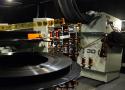
En ce moment au cinéma, les dernières modes technologiques vont à rebours du temps : à l'occasion de la sortie de L'Odyssée de Christopher Nolan, plusieurs cinémas ont ressorti dans leurs cabines leurs vieux projecteurs pellicules, désormais vus comme un équipement de luxe. Et si, dans cette célébration d'un certain passéisme, on pouvait voir un augure de ce qui arrivera bientôt dans le jeu vidéo ?

- 00:00 - L’IA qui tente de s’échapper
- 02:48 - Merci Holy
- 04:12 - Les IA qui “refusent” de disparaître
- 06:47 - Les failles de cybersécurité
- 11:29 - Les risques biologiques
- 12:35 - La génération de texte qui submerge internet
- 13:48 - La musique artificielle
- 14:29 - Désinformation massive, Deep fake et vol d’identité
- 17:20 - L’infocalypse, et hallucinations dans les domaines sensibles
- 19:38 - Jobs apocalypse
- 24:04 - La concentration des pouvoirs
- 24:54 - Les risques environnementaux
- 26:40 - Les armes autonomes et l’escalade militaire
D'où coulent les sources ?
- https://arxiv.org/pdf/2502.13295
- https://palisaderesearch.org/blog/spe...
- https://arxiv.org/abs/2404.08144
- https://arxiv.org/abs/2502.00961
- https://www.anthropic.com/news/detect...
- https://www.anthropic.com/news/disrup...
- https://www.science.org/doi/10.1126/s...
- https://www.theguardian.com/books/202...
- https://newsroom-deezer.com/2026/04/a...
- https://arxiv.org/html/2604.26965v1
- https://arxiv.org/abs/2305.09820
- https://www.newsguardtech.com/special...
- https://arxiv.org/abs/2507.18640
- https://arxiv.org/abs/2602.07814
- https://www.deloitte.com/us/en/insigh...
- https://huggingface.co/spaces/vectara...
- https://www.thelancet.com/journals/la...
- https://darioamodei.com/essay/the-ado...
- https://arxiv.org/abs/2303.10130
L'article du monde sur la fin du travail et le revenu universel: https://www.lemonde.fr/idees/article/... https://www.lemonde.fr/economie/artic... https://www.972mag.com/lavender-ai-is...
La fraude à l'identité: https://www.entrust.com/sites/default... https://www.theguardian.com/books/202... https://www.lemonde.fr/idees/article/... https://www.lemonde.fr/economie/artic... https://www.lemonde.fr/economie/artic... https://www.lemonde.fr/economie/artic... https://www.lemonde.fr/pixels/article...
L’étude sur l’impact des deep fake: https://static-content.regulaforensic... https://retractionwatch.com/2026/05/0...
Les suppressions d’emplois. https://libertystreeteconomics.newyor... https://www.challengergray.com/wp-con...
L’impact sur le marché du travail https://www.lemonde.fr/idees/article/...
L’interview d’Alex Karp:  • FULL INTERVIEW: Alex Karp on AI, Job Loss,...
We’re accumulating code faster than we are accumulating trust.” Sometimes a phrase just hits. Yes, we can create code faster now, but software is bipedal—code & trust go together. One without the other just hops along awkwardly.
Trust is as tricky as code. Both are asymmetrical. Code works or it doesn’t. One mistake in a long string of good decisions is the same as just a mistake. Trust accumulates slowly & evaporates in an instant. The difference is that in software sometimes you can repair the mistake in time proportional to the time it took to make the mistake. Trust is irreversible. Once gone it’s hard-to-impossible to get it back.
XP offered faster accumulation of functionality than folks were used to, but it didn’t suffer from the lack of trust we see among genie pioneers. I never thought of it this way before but XP manufactured trust. But how? What is a trust factory? We’ll go from practices to principles to values.

Sur mon bureau, sous le Mac mini, un petit boîtier gris à 4 500 € : le DGX Spark de NVIDIA, un supercalculateur de poche conçu pour les chercheurs et les développeurs. Pendant six semaines, j’ai coupé Claude, Codex et Gemini pour lui confier mon travail.
Communiqué de la section syndicale Solidaires Informatique, d'Ubisoft Paris Studio : L'IA suspendue
La direction d'Ubisoft Paris a décidé de suspendre le déploiement des outils IA le temps qu'une expertise soit faite, à la demande du CSE du studio Ubisoft Paris, au niveau de l'impact que ceux ci ont sur les travailleurs·euses et leur santé et sécurité au travail.
La section syndicale Solidaires Informatique se réjouit d'une telle décision car elle permet de remettre sur la table les discussions sur le futur de l'entreprise Ubisoft Paris et de sa responsabilité sociale et environnementale. En effet, le développement des IA génératives et LLMs repose sur l'exploitation des travailleurs·euses du clic des pays du sud global et ont un impact désastreux sur l'environnement.
La suspension de ce déploiement intervient après une action du CSE visant à faire respecter la loi; puisqu'Ubisoft invite avec insistance les équipes à utiliser les outils d’IA générative sans informer en amont le CSE. Cette démarche crée un risque important sur la formation, les conditions de travail et l'employabilités des salarié.e.s. Sans compter que les dépenses liées aux LLMs sont exponentielles et pour l'heure, non maîtrisées, alors qu'en parallèle la direction impose des budgets restrictifs au prétexte de faire des économies.
Le CSE d'Ubisoft Paris agit selon son rôle : celui de garantir un déploiement responsable et encadré des nouvelles technologies

I’m convinced that a large % of programmers don’t actually like computers.
As a side effect, are also perfectly happy to throw away their reasoning to a model as soon as they can.
I don’t get it, at ALL. Don’t you LIKE understanding the magic of the machine?
You do realize hand-programming (I hate that I even have to specify hand now) is fun…right?

AI didn’t kill senior developers. It killed the old seniority contract.
It keeps engineering leaders stuck in the same cycles — measuring output instead of outcomes, treating plausible code as safe change, and letting review systems collapse under AI-generated volume.
In this video, I’m breaking down the shift from seniority based on implementation speed to seniority based on risk-adjusted leverage, production judgment, and accountable technical leadership.
II. Value Proposition
You’ll learn:
• Why AI makes developers faster without automatically making software safer
• How plausible code creates review pressure, codebase entropy, and hidden production risk
• Why CTOs should stop measuring engineering by output volume and start measuring risk-adjusted business outcomes
• How to classify AI-assisted work by risk before deciding the review standard
• Why senior engineers must move from style policing to assumption review
• How architecture docs, runbooks, tests, threat models, and observability become AI-era leverage
• How to mentor junior developers to use AI without outsourcing judgment
III. Call-to-Action
If you’re tired of faster pull requests creating more uncertainty, senior engineers becoming bottlenecks, or AI adoption turning into accountability theater… this is the blueprint.
IV. Links
Want MORE from The Serious CTO? https://linktr.ee/theseriouscto
V. Time Stamps
Time Stamps:
00:00 The old seniority contract is over
01:09 Engineering is not artifact production
01:51 Sponsor: ChatLLM by Abacus AI
03:06 Why AI makes seniors look exposed
03:52 Plausible code is not safe change
05:18 AI accelerates codebase entropy
06:05 Output volume is the wrong metric
06:46 Redefine seniority around leverage
07:33 Classify AI-assisted work by risk
08:25 Make AI usage governable
09:32 Strengthen gates and assumption review
10:46 Context becomes senior leverage
11:19 Redesign mentoring for AI juniors
12:03 Who AI actually threatens
12:47 The new seniority contract
VI. Hashtags
#EngineeringLeadership #AIInSoftwareDevelopment #SoftwareEngineering #TechnicalLeadership #EngineeringManagement #BusinessStrategy #CTO #SoftwareArchitecture
VII. Keywords/Tags
AI and senior developers
AI in software engineering
senior developer career shift
engineering leadership and AI
CTO AI strategy
AI-assisted software development
software engineering risk management
risk-adjusted engineering leadership
AI code review process
AI-generated code risks
technical leadership in the AI era
software architecture and AI tools
engineering productivity metrics
DORA metrics and AI adoption
production safety in software teams
mentoring junior developers with AI
'will AI replace senior developers'
'how should CTOs manage AI-generated code'
'what skills do senior developers need in the AI era'
Le texte ci-dessous est paru dans plusieurs journaux et sur notre blog Médiapart le 18 juin, et a vocation à être signé largement par des professionel.les exercant dans l'enseignement, la culture, le journalisme, la recherche et les entreprises, mais également par tous les citoyennes et citoyens qui souhaitent avoir la possiblité de pouvoir vivre dans un monde sans IAg (intelligence artificielle générative).
Merci de nous aider à sa diffusion et sa signature, en diffusant le lien vers ce formulaire et/ou en diffusant le texte et/ou en diffusant les articles parus dans les journaux à son sujet.
Il a pour l'instant été signé plus de 2050 fois depuis son lancement le 8 juin. Nous sommes ravi.es que des professionnel.es et des citoyen.es dans toute leur diversité se reconnaissent dans ce texte et le soutiennent !
Parmi les professionel.les de la culture, du journalisme, de l'enseignement et de la recherche : Catherine Meurisse (illustratrice), Agnès Desarthe (écrivaine), Marie-Fleur Albecker (romancière et professeur d'histoire-géographie), David Bobin (journaliste), Abel Quentin (écrivain), Léa Fehner (réalisatrice), Brigitte Giraud (écrivaine), Régis Sauder (cinéaste), Maxime Lerolle (Journaliste scientifique au CNRS), Alexandre Gondran (enseignant-chercheur en IA), François Fehner (artiste dramatique), Iris Dion (scénariste), Jacques Mirenowicz (co-rédacteur en chef de La Revue Durable), Elie Wajeman (réalisateur), Jean-Marie Combelles (comédien), Laetitia Bornes (chercheuse en informatique), Stenka Quillet (journaliste et réalisatrice), Audrey Vernon (comédienne), Fabrice Eurly (musicien), la rédaction de Splann (journal), Jonathan Selman (artiste sonore), Virginie Sebeoun (médiatrice culturelle), Philippe Marquet (enseignant-chercheur en informatique), France Keyser (photojournaliste), Guilaume Binet (photographe), Betty Piccioli (autrice et directrice littéraire), Rosina Savisaar (biostatisticienne), Catherine Moulin (metteuse en scène), Lucie Prod'homme (compositrice), Damien cuvillier (dessinateur de BD), Françoise Boche (directrice de recherche), Sylvie Crossman (éditrice autrice), Caroline Fontaine (journaliste), Caroline Sahuquet (directrice d'une compagnie de théatre), Béatrice Markhoff (professeure des universités en informatique), Agnès Dherbeys (photographe), Pierre Hybre (photographe), Joël Brie (professeur associé / praticien hospitalier), Olivier Jobard (photo-journaliste et réalisateur), Xavier Demerliac (compositeur), Nora Bouazzouni (journaliste, autrice, traductrice), Fabrice Eulry (musicien), Célia Izoard (autrice, journaliste), Antonio E.Porreca (maître de conféreces en informatique), Flore Grimaud (Artiste), rédaction du journal "Qui Vive", François Gomès (dessinateur), Laëtitia Moreau (réalisatrice), Anthony Roux (éditeur et scénariste), Espé (auteur de BD), Isabelle Malin (journaliste), Laurence Dupin (traductrice),
Parmi les citoyen.nes signataires de ce texte: Alexandre Basquin (sénateur du Nord), Arnaud Saint-Martin (député de Seine-et-Marne et sociologue), Olivier Debré (consultant en cybersécurité), Véronique Delors (retraitée), Jean-Jacques Achache (médecin), Sophie Bouchonnet (Atsem), Holta Hoxha-Caron (directrice d'ONG), Bertrand Duc (auxiliaire de vie), Julie Dagnaud (bibliothécaire), Roseline Crêté (psychologue clinicienne), Carine Dufot (ingénieure), Vincent Faitre (assistant de service social), Florian Parreno (développeur web), Stella Poigné (designeuse), Julie Berger (étudiante en école de dessin), Samuel Chenal (informaticien)
... et de très nombreux.ses autres professionnelles et citoyen.nes.
La liste complète des signataires est accessible depuis le site de l'Atécopol. Elle est mise à jour de temps en temps mais pas instantanément (c'est manuel :-) ). La version pdf du texte est téléchargeable plus bas.
Adresse de contact : atecopol_objectionconscienceiag@proton.me
Appel du 18 juin : Plaidoyer pour un label Sans-IAg dans l’enseignement, la culture, le journalisme, la recherche et les entreprises.
Il y a dix ans, face à la place grandissante des plats pré-cuisinés dans la restauration, émergeait un petit logo sans prétention, sans organisme certificateur, et sans processus de labellisation : le label « fait maison ». Signe de confiance et de reconnaissance entre un restaurant et sa clientèle, il indiquait que - comme cela devrait aller de soi - la nourriture que l’on s’apprêtait à manger avait été cuisinée sur place, et non simplement réchauffée au micro-ondes après avoir été produite en usine.
Dix ans plus tard, le déferlement de l’intelligence artificielle générative (IAg) [1] dans tous les aspects de la vie quotidienne désoriente les nombreuses personnes qui sont attachées aux productions humaines et subissent cette vague de déshumanisation avec effroi, tristesse ou colère : plus moyen de savoir si un article de journal, un morceau de musique ou un contenu éducatif a été produit par une IAg. Du côté des créateur·ices, la situation n’est pas beaucoup plus rose : face à la concurrence de ChatGPT et de l’automatisation, comment faire valoir et reconnaître son choix de continuer à proposer une production humaine ?
Au-delà du cas extrême des productions entièrement générées par IAg, cette dernière peut être utilisée à des degrés divers lors de différentes phases du processus de création : illustrations, demande de financement, textes de présentation, recherches bibliographiques, ou bien entendu assistance à la production finale. Les raisons pour refuser tout cela en bloc sont multiples et sont probablement aussi diverses que le profil des personnes qui le souhaitent. La plus courante est que l’IAg n’est pas un outil neutre avec ses bons et mauvais usages mais un système technique indissociable d’un pillage massif des œuvres, d’une exploitation des travailleur·ses du clic et d’infrastructures gigantesques et énergivores. On peut aussi refuser de laisser aux entreprises du secteur des pans entiers de notre humanité créatrice ou refuser de perdre des compétences et une autonomie auxquelles nous sommes attaché·es. Mais qu’importe : que ce soit du côté des créateur·ices comme de celui des personnes qui accèdent à des contenus, il est temps que nous puissions nous reconnaître, nous rallier, nous faire confiance, et créer un réseau de créations entièrement humaines.
Une piste consisterait à demander à toutes les personnes faisant appel à l’IAg à quelque étape que ce soit de leurs processus de création de le déclarer explicitement et de manière transparente. Mais nous doutons qu’une telle pratique s’impose un jour, pour de nombreuses raisons. On peut se contenter de l’illustrer par un exemple emblématique : dans le domaine de la recherche, où la plupart des revues demandent aux scientifiques de déclarer explicitement l’usage de l’IAg dans leurs articles, une étude estime que seul 1 scientifique sur 40 utilisant l’IAg le déclare. On assiste donc dans ce domaine à des manquements majeurs et généralisés à l'éthique scientifique. Il y a fort à parier que, dans de nombreux métiers, même si l’on demandait d’afficher explicitement tout usage de l’IAg, ce dernier, peu avouable et difficilement prouvable, resterait pratiqué en catimini.
Nous proposons donc qu’un label Sans-IAg émerge rapidement partout où des personnes, des collectifs, des journaux, des laboratoires, des formations ou des entreprises prennent l’engagement de ne pas utiliser l’IAg dans leur pratique professionnelle. Ce label serait basé sur la confiance entre des humains. Il pourrait émerger à des échelles très diverses. Par exemple, dans l’enseignement, ce label pourrait apparaître à l’échelle d’un établissement, d’un département, d’une filière de formation ou d’un·e enseignant·e. Dans les médias, il pourrait être affiché à l’échelle d’un journal entier comme d’une rubrique ou d’un·e journaliste. Dans la culture, il pourrait être mis en avant au niveau d’une œuvre (film, roman, photographie, etc.), ou pour caractériser la pratique d’artistes (scénaristes, écrivain·es, etc.). Il pourrait apparaître sous la forme d’une phrase explicite, d’un logo personnel ou d’un court texte. L’important n’est pas la forme que cela prend ; il n’est peut-être même pas nécessaire qu’un label « officiel » et son lot de normes précises - et probablement invérifiables - existe ; l’important est que toutes les personnes qui se reconnaissent dans cette envie et cet engagement l’affichent explicitement. Pour autant, même en l’absence d’organisme certificateur ou de label officiel, une affirmation erronée pourrait être juridiquement considérée comme une pratique commerciale trompeuse.
Les entreprises sont un cas un peu à part mais néanmoins fort intéressant. On voit émerger un monde dystopique où des milliers de CV générés par IAg sont triés par des IAg pour recruter des personnes allant prompter toute la journée. Tout cela n’a aucun sens et nécessite une clarification urgente, afin que les étudiant·es puissent rapidement savoir quelles sont les entreprises ou services dans lesquels iels pourront exercer dignement leurs compétences. Inversement, il faudrait que les mêmes entreprises puissent rapidement reconnaître les étudiant·es qui ont de véritables compétences personnelles, car iels afficheraient explicitement leur attachement à la production humaine dans leur CV ou par le fait d’avoir choisi de suivre un cursus dans des formations humaines, c’est-à-dire sans IAg.
Il est probable que le déploiement de l’IAg ne déviera pas immédiatement de sa trajectoire dystopique actuelle. Pour autant, nous pouvons agir dès à présent pour que la poursuite d’une vie sans IAg ne s’apparente pas à un parcours d’obstacles, et même, reste tout simplement possible. Nous appelons donc à une réflexion collective à ce sujet dans toutes les institutions concernées. Il est temps de choisir son camp – IAg ou humain – et de clarifier sa position.
Ce texte est issu des réflexions inter-disciplinaires de l’Atécopol, collectif de scientifiques toulousain·es engagé·es face à l’urgence écologique. Il a été rédigé par Marianne Blanchard, Guillaume Carbou, Julian Carrey, Adeline Grand-Clément, Jean-Michel Hupé, Odin Marc, Sydney Thomas et Laure Vieu. Les rédacteur·ices ont également pris en compte les remarques et suggestions d’artistes, écrivain·es, et journalistes ayant eu accès à une version préliminaire de ce texte, ainsi que de membres du collectif Scientifiques en rébellion.
[1] On se concentre ici sur une certaine catégorie d'intelligence artificielle, les IA génératives, basées sur des grands modèles de langages (LLM, Large Language Model), qui sont entraînées sur de vastes corpus de données pour générer du texte, des images, des sons, des vidéos.
Fichiers attachés:

The Zig community is decentralized. Anyone is free to start and maintain their own community, which is not subject to these rules.
This document contains the rules that govern these spaces only:
The ziglang organization on Codeberg
#zig IRC channel on Libera.chat
Zig project development Zulip chat
The rules here are strict. This space is for focused, on topic, technical work on the Zig project only. It is everyone’s responsibility to maintain a positive environment, especially when disagreements occur.
Strict No LLM / No AI Policy
No LLM-generated content, whether it be code or prose.
No paraphrasing LLM-generated content.
No LLMs for editing, including fixing spelling or grammatical errors.
No LLMs for translation. English is encouraged, but not required. You are welcome to post in your native language and rely on others to have their own translation tools of choice to interpret your words.
No LLMs for brainstorming and then sharing the results of that brainstorming, even if you create the prose. If you use a chatbot to give you advice on a comment on the issue tracker, that comment is unwelcome.
No LLMs for finding bugs.
No talking about use of chatbot/LLM services.

Over the last several years we have become overwhelmed by the large number of code contributions (pull requests), especially those from new contributors. The number of open PRs has become a meme in the community. In part, the number of open PRs is a healthy sign that:
People are interested in contributing to Godot and are willing to put in time to contribute,
We are being cautious about feature creep,
We are dedicated to high code quality.
But ultimately, a large part of the backlog comes from the fact that the number of qualified reviewers is small, reviewing PRs is demanding, and we can’t keep up with everything coming in.
This problem is compounded by the recent increase in AI-generated contributions, both by AI agents and by humans submitting AI-generated code. The amount of effort required to make a PR has gone down (and number of PRs has increased as a result), while the amount of work to review PRs and the amount of people available to review has stayed the same. This reviewer shortage was already a problem, but it was one that we successfully ignored. We can no longer ignore it.
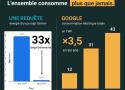
Une requête Gemini consomme 33 fois moins qu'il y a un an. Google consomme 3,5 fois plus d'électricité qu'en 2019.
Attention, exemple d'effet rebond réservé aux initiés. Mouillez-vous la nuque avant de lire, ça peut piquer un peu.
Prêts ?
Google a publié mardi son rapport environnemental 2026. On y lit qu'une requête Gemini pèse désormais 0,24 Wh, une énergie par prompt divisée par 33 en un an. Top.
⚡ Quelques pages plus loin, la consommation électrique totale du groupe : 43 TWh en 2025. Elle était de 31 TWh un an plus tôt. De 12 TWh en 2019.
Multipliée par 3,5 en six ans.
🍃 Les émissions de GES ? Elles ont presque doublé selon la méthode de calcul depuis 2019.
💧 L'eau ? x2 en 4 ans.
La frugalité agit sur les moyens là où la sobriété agit sur le besoin. Google est devenu remarquablement frugal, requête par requête.
Le besoin, lui, n'a jamais été interrogé : des aperçus IA qui s'affichent sans qu'on les demande, de la génération vidéo, des agents qui tournent en continu. Optimiser chaque brique tout en multipliant les briques... à la fin c'est l'effet rebond qui gagne.
L'analyste Ketan Joshi pose la question absente du rapport : si l'infrastructure IA croît plus vite que les réseaux ne se décarbonent, faut-il continuer à la construire ?
Combien de feuilles de route IA reposent sur la même mécanique, en plus petit ?
Comment un modèle ouvert de 35B (Ornith 1.0, MoE), piloté par l'agent open source pi sur mon infra, a écrit, testé et corrigé un vrai projet TypeScript. Verdict : le gap avec les modèles frontière se resserre, vite.

The $20 AI subscription you use every day is a mathematical impossibility. While you enjoy flat-rate access to advanced tools like Claude Code, the raw compute costs for a power user can actually skyrocket to $15,000 a year. We are officially living inside the "AI Uber Moment", a temporary illusion completely subsidized by venture capitalists who are bleeding billions just to get you hooked. But as tech giants resort to hidden financial loops and "stealth-nerfing" your favorite chatbots to survive, the money is officially running out.
Chapters:
- 00:00 - The Trillion Dollar House of Cards
- 00:36 - Chapter 1: The $20 Illusion
- 02:38 - Chapter 2: The Ghost Of Uber
- 05:03 - Chapter 3: The Claude Code Math
- 05:56 - Chapter 4: The Search Penalty
- 08:08 - Chapter 5: The Round Trip Scam
- 09:35 - Chapter 6: The Hardware Debt Trap
- 11:58 - Chapter 7: The Stealth Nerf
- 13:21 - Chapter 8: The 2026 Mass Extinction
- 15:02 - Chapter 9: The Great AI Rug Pull
Narrated by: Josh Risser
The past 3 years of work in NLP have been characterized by the development and deployment of ever larger language models, especially for English. BERT, its variants, GPT-2/3, and others, most recently Switch-C, have pushed the boundaries of the possible both through architectural innovations and through sheer size. Using these pretrained models and the methodology of fine-tuning them for specific tasks, researchers have extended the state of the art on a wide array of tasks as measured by leaderboards on specific benchmarks for English. In this paper, we take a step back and ask: How big is too big? What are the possible risks associated with this technology and what paths are available for mitigating those risks? We provide recommendations including weighing the environmental and financial costs first, investing resources into curating and carefully documenting datasets rather than ingesting everything on the web, carrying out pre-development exercises evaluating how the planned approach fits into research and development goals and supports stakeholder values, and encouraging research directions beyond ever larger language models.

For this online event, we will have the opportunity to receive Dragan Stepanović as a speaker.
After a brief introduction of our community, Dragan will explain the Systems Perspective of the LLM-assisted coding.
Abstract
This will not be your usual "all roses" talk on GenAI nor one that hijacks your amygdala with claims such as "Most developers are going to be replaced by coding agents in 9-12 months!" or "If you don't jump on the train, you're going to be left out!".
For product development teams, organizations, and their customers, every technology they want to adopt, however innovative it is or may seem, doesn't operate in isolation, but as part of a broader system. Ignoring this fact is likely to make things worse instead of achieving the promised huge productivity boost, because any change in a system affects its dynamics in a way that feeds back to affect that change in turn. Some parts of the dynamics accelerate, some start pushing back. It's becoming increasingly important to take a systems perspective on attempts to adopt a technology and understand what desired, but even more importantly, unintended consequences it's likely to cause.
I'll be diving into topics that are likely to stir the pot with uncomfortable, but important questions that a growing number of teams and organizations are facing on this journey. Great, we have this heavy machinery that can produce so much more code in a unit of time, but what do we do with all the piled-up inventory of unreviewed code? What about comprehension debt? How do we keep the ability to reason about the system? Can we replace the process of creating and evolving a product with its output (code)? LLM-assisted vs agentic coding, and which makes sense in which context?
This technology and its adoption are still in their infancy and we're operating in an uncharted territory, so no one really knows yet all the effects that will play out, but looking at it through Systems Thinking, Lean, Theory of Constraints, and XP lenses can provide a useful level of foresight into the distribution of outcomes that might play out.
About Dragan
Dragan is based in Berlin and as a principal engineer helps companies evolve their engineering culture, tame their bottlenecks, and maximize their throughput of the value.
Typically, in search of better ways of working, exploring ends of the spectrum, and helping teams and organizations try out counter-intuitive ideas that initially don't make a lot of sense, but surprisingly end up as completely opposite of that.
He enjoys endless discussions connecting XP, Theory of Constraints, Systems Thinking and Lean.