


Review UI code for Vercel Web Interface Guidelines compliance
Un jeune développeur qui explique des concepts d'informatique.
J'aime bien le rythme et la direction artistique.
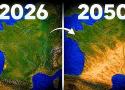
Nouvelle vidéo sur la désertification en Europe et en France.
CHAPITRES :
00:00 - Introduction
01:00 - La Terre : un désert en devenir ?
03:15 - Le désert à nos portes
05:54 - Combattre le désert
Présentation, écriture, montage : Noé Zen
Réalisation : Yohan Michas
Studio : @LIMIT
Sources :
• Fin du 2ème épisode de vents de sable dans...
https://www.ouest-france.fr/leditiond...
https://reporterre.net/La-France-rejo...
https://infos.ademe.fr/urbanisme-terr...
• L'INCROYABLE TRANSFORMATION DE L'ESPAGNE E...
• COMMENT se produit la DÉSERTIFICATION ?
• How the UN is Holding Back the Sahara Desert
• Quand le désert approche (Intégrale) - Sur...
https://infos.ademe.fr/urbanisme-terr...
https://reporterre.net/La-France-rejo...
https://www.lesechos.fr/monde/europe/...
https://www.franceinfo.fr/environneme...
https://www.ouest-france.fr/leditiond...
Numérique : dénoncer ce qui pose problème, encourager ce qui marche, et donner à tous·tes les moyens d'agir
Qui peut encore se passer du numérique aujourd'hui ? Pour accéder aux soins, à l'éducation, au logement, aux transports. Pour se distraire, s'informer, exercer ses droits et devoirs de citoyen·ne : on le retrouve partout.
Afin que chacun·e puisse comprendre ce qui se cache derrière nos écrans, Les e-novateurs s'adresse à tous·tes celles et ceux qui utilisent les outils digitaux. Par envie, par besoin... ou par contrainte.
Au-delà des constats parfois déprimants, donner à chacun·e les moyens d'agir pour réduire l'impact du numérique : c'est la mission de notre rédaction.
Un média gratuit, associatif et indépendant
Des contenus de qualité en accès libre. Zéro publicité.
Pour que chacun·e comprenne ce qui se cache derrière nos écrans, et découvre des solutions pour reprendre le contrôle sur sa vie numérique - même quand les fins de mois sont difficiles.

We use Natural Intelligence to build software libraries and applications in production today. Some of them you may be using right now.
There are people who say “nobody authors code by hand any longer.”
We are here to say that’s incorrect. Because we do it. All the time.

C'est officiel, la CNIL a requalifié les pixels de suivi comme traceurs soumis aux mêmes règles que les cookies et ce n'est pas sans conséquence.
Concrètement, cela signifie que chaque entreprise qui utilise ces pixels dans ses emails doit désormais recueillir votre consentement ou, à minima, vous permettre de vous y opposer.
Un pixel de suivi, c'est une image invisible d'un pixel sur un pixel, insérée dans le corps d'un email. Quand votre messagerie charge les images du message, elle télécharge ce pixel. Ce simple téléchargement suffit à indiquer à l'expéditeur que vous avez ouvert le mail, à quelle heure, depuis quel type d'appareil, et parfois depuis quelle ville via votre adresse IP. Tout cela sans que vous n'ayez jamais été informé ni consulté.
Les entreprises avaient jusqu'au 14 juillet pour informer leurs bases existantes et recueillir les consentements nécessaires. D'où la vague de mails de ces derniers jours. La CNIL a annoncé des contrôles à compter de cette date.
Sur le fond, cette évolution est cohérente avec la logique du RGPD. Un traceur qui collecte des données personnelles, l'heure d'ouverture, l'adresse IP, le comportement de l'utilisateur, doit obéir aux mêmes règles qu'un cookie de suivi. La technologie ne change pas la nature du traitement.
Mais cette mise en conformité massive crée une fenêtre d'opportunité pour les attaquants. Un mail de phishing imitant une "mise en conformité CNIL" est techniquement simple à fabriquer. Il reproduit l'apparence d'un service où vous êtes inscrit, inclut un lien qui ressemble au vrai, et vous invite à cliquer pour "gérer vos préférences".
Avant de cliquer sur l'un de ces mails : vérifiez l'adresse exacte de l'expéditeur, survolez le lien pour voir où il redirige réellement, et confirmez que vous êtes bien inscrit sur le service en question. En cas de doute, accédez directement au site via votre navigateur sans passer par le lien.
La conformité CNIL est une bonne nouvelle. Le phishing qui s'y greffe est un risque réel.
An open Steam.
Drop is an open-source, self-hosted alternative to platforms like Steam and Epic.
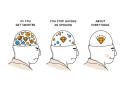
I stopped arguing with people and everything got easier
It happened because I calculated what arguments cost me, not because I don't have opinions.
Every argument offers two prizes: being right and being effective, but you rarely take both home.
So I decided to change this. I ask one honest question before I push back. I state my position once, with my reasons. And when facts won't change the outcome, I let the outcome do the teaching.
People mistake this for weakness. It takes more discipline to hold a position quietly than to defend it at all costs.
The thing is that 𝗺𝗼𝘀𝘁 𝗮𝗿𝗴𝘂𝗺𝗲𝗻𝘁𝘀 𝗮𝗿𝗲 𝗮𝗯𝗼𝘂𝘁 𝗲𝗴𝗼, 𝗻𝗼𝘁 𝗳𝗮𝗰𝘁𝘀, and you cannot beat another person's ego. They need to overcome it by themselves.
Some hills are worth dying on, but almost none are worth daily combat.
The energy I used to spend on winning debates now goes into work nobody can argue with.
A simpler and more flexible approach to consistency in event-driven systems
What is it?
Dynamic Consistency Boundaries (DCB) is a technique for enforcing consistency in event-driven systems without relying on rigid transactional boundaries.
Traditional systems use strict constraints to maintain immediate consistency, while event-driven architectures embrace eventual consistency for scalability and resilience. However, this flexibility raises challenges in defining where and how consistency should be enforced.
Introduced by Sara Pellegrini in her blog post "Killing the Aggregate", DCB provides a pragmatic approach to balancing strong consistency with flexibility. DCB allows for the selective enforcement of strong consistency where needed, particularly for operations that span multiple entities. This ensures critical business processes and cross-entity invariants remain reliable while avoiding the constraints of traditional transactional models. DCB helps teams optimize performance, scalability, and operational correctness by defining context-sensitive consistency boundaries.

Everyone is diving headfirst into the AI pool. The problem is they're diving into the shallow end. LLMs are being packed into every nook and crannie, mostly places nobody wanted it or asked for it. I'm going to be taking a baseball bat to LLMs - their hallucinatory nature and the extra instructions we're saddled with we don't get to see.. I'll be showing logs of how they literally talk themselves into lying to you. It's bad. Bring a helmet. Prompt engineering has become harness engineering, and now its "memory and context engineering". Openclaw and now codex are storing local files and 'memories' to try and handle the 'context window problem'. Moltbook has 3 million 'agents'. Openclaw is being used as a c2 now. TeamPCP is infecting every npm package they can with backdoors - weekly at this point! Just in 2026 alone we have more than tripled the number of supply chain bugs in tooling used in the LLM landscape The attack surface is growing so rapidly we can barely keep track of it. This talk will explore all this new attack surface, and cover some of the things you can do about it, and how to avoid the landmines and pitfalls when using LLMs.
Dan Tentler
Dan is the founder of Phobos Group, a boutique information security consulting and architecture firm, specializing in assessment work, security architecture, remediation efforts, advisory and simulation services. Dan's been at this a long time. Come talk to him about Phobos Airlock!
Security Fest is an inspiring and unique IT security conference held in Gothenburg, Sweden. The event is an excellent opportunity to learn more about IT security, and a great way to connect with both the renowned international speakers, and the other attendees.

Nolwenn du meetup Software Craft Lyon a écrit une CLI en Java pour requêter les exports de données LinkedIn. Ca pourrait être très pratique pour remigrer des posts et articles sur son propre site web/blog et sortir définitivement de LinkedIn pour ceux qui le voudraient.
Chouette ! un outil pour migrer mes posts vers mon site et repartir en #POSSE !
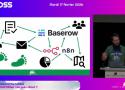
Je peux faire confiance à mon hébergeur ?
Distance = 1 bière

Florence Boulenger Journaliste : tech, futur du travail, économie, entrepreneuriat.
L’IA va vous faire gagner du temps. L’IA va améliorer votre productivité.
C’est vrai, ça ?
Pour obtenir une réponse un peu plus construite qu’un « ça dépend* », nous sommes allés voir Arthur Vinson, co-CEO de Mailoop et Suzy Canivenc, docteure en sciences de l'information et de la communication.
Déjà associés dans le cadre de l'Observatoire de l'Infobésité et de la Collaboration Numérique (OICN) fondé en 2023, ils viennent de publier une étude réalisée à partir d’une cinquantaines de sources disponibles sur le sujet.
« ChatGPT ne date que de novembre 2022. Il nous a fallu attendre quelques années pour mener un travail de recherche à partir d’un corpus suffisamment solide. »
« Où sont passés les gains de productivité de l’IA ? En partie dans le travail masqué de vérification de ce qu’elle génère. Mais aussi dans le fait qu’aucune IA ne peut régler les pertes d’efficience socio-organisationnelles... »
« Les fameuses tâches “à faible valeur ajoutée” ont une valeur : ça s’appelle l’apprentissage ! »
Quel niveau de déconnexion allez vous opérer pendant vos vacances?
Etes vous plutot numérique as usual, responsable, sobre ou carrément décroissant.e ?
Nous vous parlions ici il y a quelques semaines, de l'importance de la sémantique pour mieux se positionner dans notre adoption (ou non) du numérique.
Nous avons le plaisir de vous présenter la frise des définitions grand public réalisée avec le concours de Claire Duwig et diffusé en licence CC by.
Ce travail est toujours le fruit de notre collaboration avec francoise berthoud, Bela Loto Hiffler et Muleine SU LIM
Et puis, sinon je vous souhaite une bonne déconnexion!!! rendez vous fin aout !!!! Moi, je pars avec mes livres papier ! Dont Hexa de @Gabrielle Filteau Chiba