Oùsontles
développeuses
Le QG des développeuses en France.
Se retrouver, se rendre visibles, et montrer aux prochaines que c'est possible



Abstract
“AI is going to radically change creative work”, we hear all around us. But what is that creativity that needs to be disrupted? In this talk Felienne Hermans, professor of computer science education at VU Amsterdam, will examine technology’s worldview, one of control and dominance, of measurements and data, and examine how that worldview shapes their understanding of the world and of their software systems.
This keynote by Felienne Hermans asks: What type of knowledge do we lose if we adopt AI? What perspectives might be lost? And what does that mean for the future of work?
Taylor Arndt
Accessibility specialist and Swift developer | I make technology usable for everyone | I build on-device AI apps
I ran into a common accessibility failure today while testing a web app:
“Fix the highlighted fields below.”
That message depends entirely on sight. A blind screen-reader user may not know which field is highlighted, what went wrong, or how to correct it.
An accessible form error should:
• Clearly announce that something went wrong
• Identify the exact field with the error
• Explain the problem in plain language
• Tell the user how to fix it
• Connect the error message directly to the affected field
• Move focus to an error summary or the first invalid field when appropriate
This matters because a vague error message can stop someone from creating an account, submitting information, completing a purchase, or using your product at all.
These are the kinds of barriers I find through Taylor’s Teardowns.
I use your website, web app, iOS app, or AI product as a real blind customer using a screen reader. Then I show you what works, where the experience breaks, and what your team should fix first.
A teardown is not a full compliance audit. It is focused, practical, real-user feedback that helps product leaders identify accessibility barriers before customers encounter them.
See exactly what a teardown looks like in my ActiveCampaign sample:
Only a few reduced-price launch spots remain:
• $75 for a written teardown
• $175 with a recorded screen-reader walkthrough
Book your teardown:
Do not let an inaccessible error message cost you a customer.
#DigitalAccessibility #AccessibilityTesting #AIAccessibility #InclusiveDesign #UXTesting #ProductDevelopment #ProductLaunch #AccessibleTech
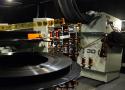
En ce moment au cinéma, les dernières modes technologiques vont à rebours du temps : à l'occasion de la sortie de L'Odyssée de Christopher Nolan, plusieurs cinémas ont ressorti dans leurs cabines leurs vieux projecteurs pellicules, désormais vus comme un équipement de luxe. Et si, dans cette célébration d'un certain passéisme, on pouvait voir un augure de ce qui arrivera bientôt dans le jeu vidéo ?

Après trois canicules successives (trois "fournaises" plutôt), et une éco-anxiété qui monte pour une population de mieux en mieux éduquée (1), vous voulez demander des comptes aux dirigeants. Voici des questions à poser à votre préfet.e, votre député.e, votre sénateur/trice, votre maire, votre patron/ne:
1/ L'inversion culturelle en agriculture, premier levier de l'habitabilité: Qu'avez-vous fait pour accompagner le renoncement à l'agriculture intensive (avec sa dépendance au pétrole, sa grande fragilité socio-écologique, économique et géopolitique, et ses externalités négatives) ? Qu'avez-vous fait pour accompagner la transition vers l'agroécologie et l'agroforesterie (qui résiste mieux aux fluctuations, qui dépollue les sols, qui retient l'eau, qui crée des microclimats, etc.)?
2/ L'inversion culturelle en économie: Qu'avez-vous fait pour accompagner le renoncement à l'économie de la (sur)production (avec sa dépendance au pétrole, et ses nombreuses externalités négatives)? Qu'avez-vous fait pour accompagner la transition vers l'économie de la fonctionnalité et de la coopération (nettement moins énergivore, et premier kilomètre de la démocratie, par l'économie)?
3/ L'inversion culturelle en éducation (à tous les âges): Qu'avez-vous fait pour accélérer l'éducation au vivant dans votre territoire? Qu'avez-vous fait pour sortir du culte de la compétition (qui exige des ressources abondantes que nous n'avons plus), pour au contraire, former à la coopération (qui nourrit la viabilité dans les fluctuations)?
4/ L'inversion culturelle en politique: En toute honnêteté, quelles décisions avez-vous pris qui n'endossent pas le fait scientifique, et pourquoi? Qu'avez-vous changé pour pouvoir endosser le fait scientifique à l'avenir? Quelles démarches participatives avez-vous initié et soutenu ces dernières années? Avec quels résultats?
Des questions simples donc.
Qui ne peuvent pas rester sans réponse.
Photo: Kane Reinholdtsen (Unsplash

France Travail développe un algorithme de profilage des chômeur·euses à des fins de contrôle, comme le prouve un document que nous publions aujourd’hui en partenariat avec la cellule investigation de Radio France. Cet algorithme, encore en phase de test, manifeste la volonté de France Travail de massifier les contrôles via l’utilisation d’outils numériques. Nous appelons à la mobilisation contre cet algorithme illégal et à son abandon par la direction de France Travail.
Le 10 décembre dernier, un nouvel outil numérique était présenté au comité d’éthique IA de France Travail. Intitulé « Ciblage du Contrôle de la Recherche d’Emploi », son objectif est de « recourir à l’IA » afin d’« identifier les dossiers nécessitant un examen approfondi » et d’« alimenter automatiquement l’outil de contrôle de la recherche d’emploi ». Lors de sa présentation, cet outil était en phase active de test, étape préalable à un déploiement plus large.
En d’autres termes, l’ancien Pôle Emploi cherche à se doter d’un outil similaire à ceux que nous dénonçons à la CNAF ou à l’Assurance maladie, visant à automatiser la sélection des personnes devant faire l’objet d’un contrôle.
Pour des transformations
justes et utiles
Ctrl-a est un écosystème rassemblant ecedi, numerik-ea, Temesis, Smart Agence, emundi, Cap Nova, La Ligne et le collectif +. Ensemble, nous accompagnons nos clients dans leurs transformations, unis par une même exigence : proposer des réponses justes et utiles.

Jeu vidéo Android pour apprendre sur le sujet des dark patterns

- 00:00 - L’IA qui tente de s’échapper
- 02:48 - Merci Holy
- 04:12 - Les IA qui “refusent” de disparaître
- 06:47 - Les failles de cybersécurité
- 11:29 - Les risques biologiques
- 12:35 - La génération de texte qui submerge internet
- 13:48 - La musique artificielle
- 14:29 - Désinformation massive, Deep fake et vol d’identité
- 17:20 - L’infocalypse, et hallucinations dans les domaines sensibles
- 19:38 - Jobs apocalypse
- 24:04 - La concentration des pouvoirs
- 24:54 - Les risques environnementaux
- 26:40 - Les armes autonomes et l’escalade militaire
D'où coulent les sources ?
- https://arxiv.org/pdf/2502.13295
- https://palisaderesearch.org/blog/spe...
- https://arxiv.org/abs/2404.08144
- https://arxiv.org/abs/2502.00961
- https://www.anthropic.com/news/detect...
- https://www.anthropic.com/news/disrup...
- https://www.science.org/doi/10.1126/s...
- https://www.theguardian.com/books/202...
- https://newsroom-deezer.com/2026/04/a...
- https://arxiv.org/html/2604.26965v1
- https://arxiv.org/abs/2305.09820
- https://www.newsguardtech.com/special...
- https://arxiv.org/abs/2507.18640
- https://arxiv.org/abs/2602.07814
- https://www.deloitte.com/us/en/insigh...
- https://huggingface.co/spaces/vectara...
- https://www.thelancet.com/journals/la...
- https://darioamodei.com/essay/the-ado...
- https://arxiv.org/abs/2303.10130
L'article du monde sur la fin du travail et le revenu universel: https://www.lemonde.fr/idees/article/... https://www.lemonde.fr/economie/artic... https://www.972mag.com/lavender-ai-is...
La fraude à l'identité: https://www.entrust.com/sites/default... https://www.theguardian.com/books/202... https://www.lemonde.fr/idees/article/... https://www.lemonde.fr/economie/artic... https://www.lemonde.fr/economie/artic... https://www.lemonde.fr/economie/artic... https://www.lemonde.fr/pixels/article...
L’étude sur l’impact des deep fake: https://static-content.regulaforensic... https://retractionwatch.com/2026/05/0...
Les suppressions d’emplois. https://libertystreeteconomics.newyor... https://www.challengergray.com/wp-con...
L’impact sur le marché du travail https://www.lemonde.fr/idees/article/...
L’interview d’Alex Karp:  • FULL INTERVIEW: Alex Karp on AI, Job Loss,...
FollowTheMoney (FtM) is a data model for financial crime investigations and document forensics.
It contains definitions of the entities relevant in such research (like people or companies) and tools that let you generate, validate, and export such data easily. Entities can reference each other, creating a graph of relevant relationships. The ontology defined by FtM also includes a model for various types of documents that might be used as evidence in investigations.

Your team size is working against you.
Four researchers. Four findings. All contradicting each other.
💡1880. Maximilien Ringelmann.
Asked people to pull a rope. Alone. Then in groups.
One person? 100% effort.
A group of eight? Half of what you'd expect.
Conclusion: the bigger the group, the less each person tries.
💡A few decades later. Francis Galton.
Asked 800 random people to guess the weight of an ox.
The crowd was off by less than 1%.
No single expert came close.
Conclusion: large groups are smarter than any individual.
💡1970. Robert Metcalfe.
3 people → 3 connections.
6 people → 15 connections.
10 people → 45 connections.
Conclusion: every person you add makes the whole network more valuable.
💡1975. Fred Brooks.
Used the exact same math as Metcalfe.
But showed the opposite conclusion.
Every new person adds communication lines.
Coordination becomes the work.
Conclusion: adding people to a late project makes it later.
So. Are large groups a curse, or a blessing?
Or can we get the best of both worlds?
The answer depends on how you design for it.
Across the 200+ workplace pioneers we've visited, the best ones don't choose between small and big. They get big by staying small.
Here's how:
📍 𝗣𝘂𝗿𝗽𝗼𝘀𝗲 𝗮𝘀 𝘁𝗵𝗲 𝗮𝗻𝘁𝗶𝗱𝗼𝘁𝗲 𝘁𝗼 𝘀𝗼𝗰𝗶𝗮𝗹 𝗹𝗼𝗮𝗳𝗶𝗻𝗴
When the mission is clear and meaningful, people want to contribute. That's Ringelmann in reverse.
📍 𝗦𝗺𝗮𝗹𝗹 𝘁𝗲𝗮𝗺𝘀, 𝘃𝗶𝘀𝗶𝗯𝗹𝗲 𝗲𝗳𝗳𝗼𝗿𝘁
Networks of small teams (5–12 people) with clear end-to-end responsibility. Small enough for effort to stay visible. Small enough for coordination to stay manageable.
📍 𝗔 𝗻𝗲𝘁𝘄𝗼𝗿𝗸 𝗼𝗳 𝘁𝗲𝗮𝗺𝘀, 𝗻𝗼𝘁 𝗮 𝗵𝗶𝗲𝗿𝗮𝗿𝗰𝗵𝘆 𝗼𝗳 𝗽𝗲𝗼𝗽𝗹𝗲
Dense coordination stays inside each small team. Connections between teams stay lightweight. You grow the network, without the overhead.
📍 𝗧𝗿𝗮𝗻𝘀𝗽𝗮𝗿𝗲𝗻𝗰𝘆 𝗿𝗲𝗽𝗹𝗮𝗰𝗲𝘀 𝘁𝗵𝗲 𝗺𝗶𝗱𝗱𝗹𝗲𝗺𝗮𝗻
Performance, goals, and financials shared openly. This enables collective intelligence, and makes hiding impossible.
📍 𝗣𝗲𝗲𝗿 𝗮𝗰𝗰𝗼𝘂𝗻𝘁𝗮𝗯𝗶𝗹𝗶𝘁𝘆 𝗺𝗮𝗸𝗲𝘀 𝗶𝘁 𝘀𝘁𝗶𝗰𝗸
Train people to hold each other accountable, without relying on a boss. Over time, this creates a discipline stronger than top-down control.
We went into detail in last week's newsletter. Still not subscribed?
📩 Join 60,000+ readers and get it in your inbox 👉 https://lnkd.in/eDAWQyTq

In an open letter to engineering leaders everywhere, Fin CTO Darragh Curran explains that AI isn't a magic wand but rather an amplifier—of the good and the bad—of your engineering practices. And engineering rigor is more important than ever.
The world is especially hard right now. The future of the software engineering profession looks more uncertain than ever. Execs are under heavy pressure to turn AI into magic results, and teams are fighting product competition and AI-induced burnout on one side, melting mental models and hellish oncall on the other side.
Observability was supposed to be a solved problem by now. But we heard over and over and over from staff+ engineers, managers, and executives that it continues to be one of the biggest pain points:
“We spent six months evaluating and choosing a tool, and got overruled behind our back.”
“It takes 15 minutes to recover from an outage if the principal engineer is on call, and 45 minutes if he isn’t. Nothing we seem to buy or do or try seems to change this.”
“I’m pretty sure the competitive research is all faked.”
We weren’t planning to write a whole book-within-a-book to speak to technical decision-makers from the top down, but that’s what happened. The first five parts of Observability Engineering are written for software engineers and the people who need to understand their code. The sixth is written for technical decision-makers.
We start with an open letter to CTOs, explaining why all their grand ambitions and goals with AI are blocked behind their organization’s’ ability to learn. Then we cover software delivery and observability from a systems perspective—no technical terminology, just systems thinking. We then talk about how to quantify the case for observability as a cost center or an investment, how to drive change in your organization, how to make good buy-vs-build decisions, how to partner with vendors, and how to approach instrumentation and security from a top-down perspective.
We’re accumulating code faster than we are accumulating trust.” Sometimes a phrase just hits. Yes, we can create code faster now, but software is bipedal—code & trust go together. One without the other just hops along awkwardly.
Trust is as tricky as code. Both are asymmetrical. Code works or it doesn’t. One mistake in a long string of good decisions is the same as just a mistake. Trust accumulates slowly & evaporates in an instant. The difference is that in software sometimes you can repair the mistake in time proportional to the time it took to make the mistake. Trust is irreversible. Once gone it’s hard-to-impossible to get it back.
XP offered faster accumulation of functionality than folks were used to, but it didn’t suffer from the lack of trust we see among genie pioneers. I never thought of it this way before but XP manufactured trust. But how? What is a trust factory? We’ll go from practices to principles to values.

X11 display server written in x86_64 Linux assembly. No libc, no toolkits, no FreeType, no Mesa, no Xlib. Just NASM source, direct syscalls, the X11 wire protocol on a Unix socket, and the kernel's DRM/KMS + evdev interfaces.
Long-range goal: serve enough of the X11 wire protocol (core + SHAPE + RENDER + XKB + COMPOSITE + DAMAGE + RANDR + MIT-SHM + XInput2 + XVideo) to host the whole CHasm desktop plus arbitrary X clients — Firefox, VS Code, GIMP, Inkscape — all software-rendered, all on a stack written end-to-end in asm.

Sur mon bureau, sous le Mac mini, un petit boîtier gris à 4 500 € : le DGX Spark de NVIDIA, un supercalculateur de poche conçu pour les chercheurs et les développeurs. Pendant six semaines, j’ai coupé Claude, Codex et Gemini pour lui confier mon travail.

Cher Philippe Latombe, je crois avoir trouvé une belle poutre dans l'œil de notre souveraineté numérique…
Pour utiliser FranceConnect+, devenu indispensable pour certaines démarches sensibles, notamment la gestion d'une entreprise via l'INPI ou utiliser son CPF, l'Identité Numérique de La Poste Groupe est quasiment incontournable.
Sauf que son application exige d'avoir été installée depuis Google Play ou l'App Store. Pas d'alternative. Et, sauf erreur, aucune raison technique sérieuse à cela.
Donc demain, Google ou Apple peuvent potentiellement couper l'accès à une brique essentielle de nos démarches administratives ? Voire profiter de leur position privilégiée dans la chaîne de confiance pour compromettre nos comptes.
C'est un sacré paradoxe de leur confier un maillon de la chaîne de confiance de notre identité numérique…
À l'heure où vous portez ce combat à l'Assemblée, est-ce vraiment normal ?
La souveraineté numérique, ça commence peut-être aussi par regarder nos dépendances les plus concrètes. Et celle-ci est assez spectaculaire!

- approved picture
- apporved log
The secret to working faster with AI isn't better prompts, or bloating your AGENT.md. It's all about managing cognitive load, habits, and creating systems that let your agent work unsupervised.
Speaker bio: Ivett Ördög is a Samman technical coach with over 30 years of coding experience. She helps engineering teams tackle legacy systems and work effectively with AI coding agents. She is the creator of the @NextIncrement YouTube channel and serves on the board of the Samman Technical Coaching society since 2025.