
When my new insulin pump’s algorithm confidently delivered what it claimed were hefty doses while my blood sugar soared toward dangerous levels, I faced a terrifying reality: the software was learning, but learning the wrong things.
And it was utterly convinced it was doing a great job.
This isn’t just a medical device story - it’s a wake-up call for our entire industry. As ML and AI become critical infrastructure, they’re exposing fundamental flaws in how we approach quality. We test implementation rather than behaviour, write tests that validate our assumptions rather than challenge them and mistake comprehensive coverage for genuine safety.
Drawing from 15+ years as a software engineering trainer and consultant across multiple industries, I’ll explore how traditional testing blind spots become genuinely dangerous when systems learn and adapt. We’ll examine why teams confuse feeling safe with being safe, how AI amplifies our existing quality gaps and what it really means to test systems that make decisions affecting real lives.
You’ll leave with practical approaches to testing that focuses on impact over metrics, strategies for validating both deterministic and learning systems, and the essential questions every team should ask when software moves beyond just processing data to making decisions that matter.
Because whether it’s a payment system, a recommendation algorithm or life-critical medical software, our users are trusting us to get it right.
The edge cases between the edges
T shaped but untrained in testing
Quelques invitations :
- Create an interaction matrix for your edge cases
- Write Property Based Tests for your constraints
- Implement chaos engineering for your business logic, not just your infrasctucture
- Document and test your "must never" invariants explicitely (ex.
MUST_NEVER.md - For ML systems specifically, test the decision boundaries, not just accuracy
- Build observability into your business logic, not just your infrastructure
- Implement feature flag controls for rule interactions
- Use your Threat Model
- Get to know all the people and what they need
- Ask the uncomfortable question
Would I trust this system... With my wealth ? My Freedom ? My Life ? -> Meeh, or No and you put it out in production, SHAME ON YOU.


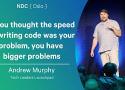
AI can write code faster than you. Congratulations to the robots. But if speed of code production is the thing holding your team back, I've got some uncomfortable news: you have much bigger problems and nobody is willing to talk about them.
I've spent over 25 years building software and the bottleneck was almost never the typing. It was the three-week argument about what to build. The requirements that changed after you shipped. The stakeholder who couldn't articulate what they actually needed. The architectural decision nobody wanted to own.
Kent Beck said something that stuck with me: 90% of his skills dropped to zero value, but the remaining 10% got a 1000x multiplier. He's right. And the engineers doing well right now (actually well, not performing wellness for LinkedIn) are the ones who figured out which 10% is theirs. They stopped identifying primarily as "people who write code" and started identifying as people who solve problems. Code just happens to be one of the tools.
If your AI strategy is "write code faster," you're optimising the wrong thing.
Let's talk about what to optimise instead.
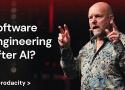
Kent Beck created Extreme Programming, helped pioneer test-driven development, and was the first signatory of the Agile Manifesto. At Prodacity 2026 he talked about what craft means now that a model is writing much of the code.
In this session:
- Why Beck calls it the genie, and why plausible code is not working code
- Features and futures: how every feature you ship burns some of your options for change
- Resting between the notes, and what teams do in the space between features
- One-shot versus iterative, and why spec-driven development is waterfall wearing a new coat
- What he found in formal methods with Lean, and the gap he still cannot bridge
- Effort, output, outcome, mission: a revision Beck worked out during Day 1, and what Goodhart's law does to any measure taken too early
Recorded live at Prodacity 2026 in Nashville. Prodacity is Rise8's 3-day training event for GovTech leaders delivering mission-critical software.

Vibe code cleanup
Le point sur la nouvelle vague d’alarmisme et les appels à la régulation de l'IA formulés par les principaux acteurs.
Tout a commencé par le piratage informatique du site Hugging Face par des IA agentiques1 ayant échappé au contrôle d’OpenAI. Rapidement, ses concurrents Méta, Anthropic et le chinois Moonshot AI ont affirmé avoir provoqué des incidents similaires lors des phases de test de leurs propres programmes.
...


Recap
- Avoid equating sovereignty with data residency or complete independence
- Digital sovereignty can be fit into an engineering model
- Test the sovereignty ability during scenarios, not just at runtime

- Evaluation gap
- Propagation effet papillon (erreur amplifiée et démultipliée)
- Effets dette compréhension lors d'incident
- Mitiger
- Prompting socratique
- Prise en compte evaluation gap dans workflow d'équipe

Une take intéressante sur l'expérience utilisateur, et l'absence de friction.
22:29 L'IA : Une technologie irrésistible
Effet Ikea (biais cognitif)



L'IA à l'école : bonne ou mauvaise idée ?
📖 CHAPITRES
- 00:00 Intro
- 00:57 1 : L'IA remplace les profs
- 03:21 2 : Réviser avec ChatGPT : mauvaise idée ?
- 06:57 3 : La meilleure méthode pour apprendre
- 09:47 4 : Est-ce que l'IA nous rend plus bêtes ?
- 14:11 5 : Interdire l'IA à l'école ?
- 17:15 Conclusion
🚰 SOURCES ET ATTRIBUTIONS
🔵 Intro
-
Alpha School, reportage CBS « Inside the $40,000 a year school » :
 • Inside the $40,000 a year school where AI ...
 -
France 24, la classe de CE1 avec IA :
• Dans cette école, l’IA révolutionne l’appr... -
Citation de Jonathan Haidt, « The Anxious Generation » (2024)
🔵 Chapitre 1
- Australie, réseaux sociaux interdits aux moins de 16 ans :
https://www.esafety.gov.au/about-us/i...
- France, interdiction votée pour les moins de 15 ans :
https://www.touteleurope.eu/societe/l...
- ChatGPT, 100 millions d'utilisateurs en 2 mois (analyse UBS) :
https://www.reuters.com/technology/ch...
🔵 Chapitre 2
- L'étude en Turquie, Bastani et al., « Generative AI Can Harm Learning » (Wharton/UPenn) :
https://papers.ssrn.com/sol3/papers.c...
-
Animation reprise de l'excellente chaîne Science Petr, « AI Is Frying Your Brain » :
• AI is frying your brain. -
Son guide pour transformer une IA en tuteur :
- L'étude d'Harvard, Kestin et al. (Scientific Reports, 2025) :
https://www.nature.com/articles/s4159...
- Démo Khanmigo, de Sal Khan : • How AI Could Save (Not Destroy) Education ...
🔵 Chapitre 3
- Daniel Kahneman, « Système 1 / Système 2 : Les deux vitesses de la pensée » (2011)
- Veritasium, conférence « What Everyone Gets Wrong About AI and Learning » : • Veritasium: What Everyone Gets Wrong About...
🔵 Chapitre 4
- L'étude du MIT, Kosmyna et al., « Your Brain on ChatGPT » :
https://arxiv.org/abs/2506.08872
- L'effet Google, Sparrow, Liu & Wegner (Science, 2011) :
https://www.science.org/doi/10.1126/s...
- Jonathan Haidt, « Into the Machine » : • Is AI making you stupid? w/Jonathan Haidt
🔵 Chapitre 5
- Chine, IA gelées pendant le gaokao (juin 2025) :
https://fortune.com/asia/2025/06/09/a...
- Décret présidentiel américain du 23 avril 2025 (Executive Order 14277) :
https://www.presidency.ucsb.edu/docum...
- Belgique, concours de médecine (La Libre) :
https://www.lalibre.be/belgique/ensei...
- Le mode étude de ChatGPT :
https://openai.com/index/chatgpt-stud...
- Le mode apprentissage de Claude :
https://www.anthropic.com/news/introd...
- L'apprentissage guidé de Gemini :
https://blog.google/products-and-plat... Miniature inspirée des excellentes chaînes Fern et AQuatre

Messieurs les créateurs-développeurs-propriétaires des principales boutiques d’intelligence Universelle, après avoir obtenu du Président Trump que nul sur la planète ne puisse brider vos activités, car il était lui Le Président fort et intelligent la condition nécessaire et suffisante pour tout sécuriser, vous venez de déclarer :
« Ce que nous avons développé est tellement puissant que cela pourrait aboutir à une perte de contrôle en mode Frankenstein ; nous souhaitons sincèrement une pause, et nous sommes prêts à l’imposer à nos équipes, à la seule condition que tous les intervenants du secteur, dont les asiatiques, fassent de même et acceptent d’être contrôlés.
...
Empowering Personal Knowledge Management
Cortexs AI empowers personal knowledge management by unifying your notes, chats, and resources into a single, intelligent workspace.
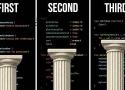
An in-depth technical breakdown of the paradox surrounding AI-generated code, software demand elasticity, and why large language models struggle when scaling enterprise codebases.
In this video, we explore the economic backdrop of Jevons Paradox in software engineering, examine how transformer attention mechanisms process tokens, and break down the 3 core architectural failure modes limiting AI code generation.
TIMESTAMPS:
- 00:00 - The Problem: AI Generates Too Much Code
- 01:04 - Demand Elasticity & Software Features
- 04:00 - Jevons Paradox in Software Development
- 04:48 - How AI Reads Code: Tokens & High-Dimensional Vectors
- 08:01 - The Attention Mechanism & Context Windows
- 10:19 - Pillar 1: Context Window Limits & Quadratic Scaling (O(n²))
- 14:13 - Pillar 2: Sparse Attention & Missed Connections
- 15:02 - Pillar 3: Retrieval (RAG) & Decoupled Index Blind Spots
- 16:32 - The Self-Reinforcing Loop & Conclusion
Skill pour deslopiser UK UI web


Making an AI better has meant making it bigger for about six years now, and it has worked well enough that most people treat it as a rule, but a recent paper from MIT found the point where it stops. Every LLM has to hold more concepts than it has room for, so it stacks them into the same directions and lets them overlap.
That overlap is called superposition, and it is the reason these models work as well as they do, though it is also the reason they get things wrong. The paper worked out the exchange rate.
Double the width of a model and you halve the errors, which turns out to be most of why bigger models have been better all along. In this video, I break down what a model's internal space actually looks like, why holding more concepts than it has dimensions is what makes models wrong in the first place, and the three separate things that stop this strategy from running forever, only one of which is money.
🧭 Chapters
- 00:00 The Space Inside GPT-1, 2 and 3
- 00:40 How LLMs Actually Learn
- 01:24 More Concepts Than Dimensions
- 01:54 Superposition Explained
- 02:33 Where Interference Comes From
- 03:08 The One Over Width Formula
- 04:16 Why Every Doubling Costs Six Times More
- 05:02 Zipf's Law Locks The Rate
- 06:00 Why The Errors Never Reach Zero
- 06:37 The Ceiling
- 07:18 What Researchers Are Building Instead
📚 Extra resources
- Superposition Yields Robust Neural Scaling (MIT, NeurIPS 2025): https://arxiv.org/abs/2505.10465
- Toy Models of Superposition (Anthropic, 2022): https://transformer-circuits.pub/2022...
- Language Models are Unsupervised Multitask Learners (GPT-2, 2019): https://cdn.openai.com/better-languag...
- Language Models are Few-Shot Learners (GPT-3, 2020): https://arxiv.org/abs/2005.14165
- Training Compute-Optimal Large Language Models (Chinchilla, 2022): https://arxiv.org/abs/2203.15556
- The rising costs of training frontier AI models (Epoch AI, 2024): https://arxiv.org/abs/2405.21015