
We live in a world that deserves unicorns," says Katherine Rundell.
If you haven't come across Rundell's work yet, you will soon. She's written over a dozen books, including an award-winning biography of John Donne and the children's fantasy series Impossible Creatures - a copy of which every Year 6 child in the country will receive this Christmas. Disney has just signed a seven-figure deal for the screen adaptation. Rundell is being touted as the next JK Rowling.
When she's not writing, Rundell works on Renaissance literature as a fellow of Oxford University.
Two themes recur throughout her work: fantasy and animals. And as you might guess from her feelings about unicorns, the two are rarely far apart.
On this episode she joins Tanjil Rashid, following the publication of her new essay collection Napolean's Orangutang to talk about what humans should learn from animals, the connection between religion and fantasy, and - in her words - why wonder is political


Les pratiques dangereuses se multiplient sur ces chantiers dans plusieurs pays européens, comme le révèle une enquête de cinq mois menée par Investigate Europe avec des partenaires dans huit pays, dont « Le Monde ».
Par Mei-Ling McNamara (Investigate Europe), Jan Daalder (Follow the Money) et Léa Prati
Le Monde
Mais ils se sont excusés... alors ca va !

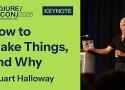
This is a talk about how to find flow, power, and joy in making software. It is about how to share the love of making with others, and how to nurture and protect communities of makers.
Stuart Halloway à la conférence Conj 2026 (La conférence autour du langage de programmation Clojure).
Un regard très critique présenté avec humour de la profession à l'ère des nouveaux outils d'automatisation.
Quelques idées que j'ai retenues :
-
C'est quoi programmer
-
Etudes de mesure de productivité = de la merde
-
La seule étude dont les résultats sont très clairs : l'IA nous rend plus cons
-
Index du software slopfree
-
"Forward Deployed Engineer" : les envoyés des big tech pour vous imposer leur technologie
-
Se poser les bonnes questions sur l'IA :
- C'est quoi ? : AI = Automatisation : lire ce qui a déjà été écrit sur le sujet pour comprendre l'enjeu actuel
- Pourquoi ? : Parceque on peut
- A qui profite : Les tech bros : En 50 ans CEO gagnent de 30x le salaire du travailleur à 300x aujourd'hui
-
Ce qu'on peut faire individuellement
- insister sur IA disclosure : quel contenu, action prise, outil IA utilisé, raison de l'utilisation, quelle supervision par l'humain ?
- Changer les mentalités : me balancer un texte sloppé c'est impoli
- Lire à propos de l'automatisation, IA (livre : The Promise of Artificial Intelligence, Reckoning and Judgement — Brian Cantwell Smith)
- Rappeler que les études sur la productivité sont toujours de la merde
- Se Déplateformiser des LLM
- Garder/réintroduire de la friction : ex. ne pas utiliser l'IA dans les écoles primaires, quand on enseigne, socialiser
- Automatiser pour la qualité = craft (on avait déjà le pb de la qualité avant ça !), en opposition à la quantité (attendu des capitalistes)
-
Ce qu'on peut faire collectivement
- Groupes de pression à toutes les échelles, entre pairs, forums ouverts
- Se syndiquer, le meilleur moment c'était hier
- Plaidoyer sur ce qui est déjà connu : l'automatisation, appliquer les lois et règlementataions existantes : IA = automatisation pourquoi ne pas appliquer ce qui se fait déjà par ailleurs?
La pensée critique est toujours cruciale : c'est un avantage compétitif

<details>
<summary>
Transcript
</summary>
</details>

Faire une fois ou 2 l'exercice.
- Faites d'abord à la main.
- Faites faire à l'IA
- Comparez et apprenez
When my new insulin pump’s algorithm confidently delivered what it claimed were hefty doses while my blood sugar soared toward dangerous levels, I faced a terrifying reality: the software was learning, but learning the wrong things.
And it was utterly convinced it was doing a great job.
This isn’t just a medical device story - it’s a wake-up call for our entire industry. As ML and AI become critical infrastructure, they’re exposing fundamental flaws in how we approach quality. We test implementation rather than behaviour, write tests that validate our assumptions rather than challenge them and mistake comprehensive coverage for genuine safety.
Drawing from 15+ years as a software engineering trainer and consultant across multiple industries, I’ll explore how traditional testing blind spots become genuinely dangerous when systems learn and adapt. We’ll examine why teams confuse feeling safe with being safe, how AI amplifies our existing quality gaps and what it really means to test systems that make decisions affecting real lives.
You’ll leave with practical approaches to testing that focuses on impact over metrics, strategies for validating both deterministic and learning systems, and the essential questions every team should ask when software moves beyond just processing data to making decisions that matter.
Because whether it’s a payment system, a recommendation algorithm or life-critical medical software, our users are trusting us to get it right.
The edge cases between the edges
T shaped but untrained in testing
Quelques invitations :
- Create an interaction matrix for your edge cases
- Write Property Based Tests for your constraints
- Implement chaos engineering for your business logic, not just your infrasctucture
- Document and test your "must never" invariants explicitely (ex.
MUST_NEVER.md - For ML systems specifically, test the decision boundaries, not just accuracy
- Build observability into your business logic, not just your infrastructure
- Implement feature flag controls for rule interactions
- Use your Threat Model
- Get to know all the people and what they need
- Ask the uncomfortable question
Would I trust this system... With my wealth ? My Freedom ? My Life ? -> Meeh, or No and you put it out in production, SHAME ON YOU.
AI can write code faster than you. Congratulations to the robots. But if speed of code production is the thing holding your team back, I've got some uncomfortable news: you have much bigger problems and nobody is willing to talk about them.
I've spent over 25 years building software and the bottleneck was almost never the typing. It was the three-week argument about what to build. The requirements that changed after you shipped. The stakeholder who couldn't articulate what they actually needed. The architectural decision nobody wanted to own.
Kent Beck said something that stuck with me: 90% of his skills dropped to zero value, but the remaining 10% got a 1000x multiplier. He's right. And the engineers doing well right now (actually well, not performing wellness for LinkedIn) are the ones who figured out which 10% is theirs. They stopped identifying primarily as "people who write code" and started identifying as people who solve problems. Code just happens to be one of the tools.
If your AI strategy is "write code faster," you're optimising the wrong thing.
Let's talk about what to optimise instead.
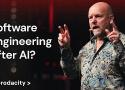
Kent Beck created Extreme Programming, helped pioneer test-driven development, and was the first signatory of the Agile Manifesto. At Prodacity 2026 he talked about what craft means now that a model is writing much of the code.
In this session:
- Why Beck calls it the genie, and why plausible code is not working code
- Features and futures: how every feature you ship burns some of your options for change
- Resting between the notes, and what teams do in the space between features
- One-shot versus iterative, and why spec-driven development is waterfall wearing a new coat
- What he found in formal methods with Lean, and the gap he still cannot bridge
- Effort, output, outcome, mission: a revision Beck worked out during Day 1, and what Goodhart's law does to any measure taken too early
Recorded live at Prodacity 2026 in Nashville. Prodacity is Rise8's 3-day training event for GovTech leaders delivering mission-critical software.

Vibe code cleanup
Le point sur la nouvelle vague d’alarmisme et les appels à la régulation de l'IA formulés par les principaux acteurs.
Tout a commencé par le piratage informatique du site Hugging Face par des IA agentiques1 ayant échappé au contrôle d’OpenAI. Rapidement, ses concurrents Méta, Anthropic et le chinois Moonshot AI ont affirmé avoir provoqué des incidents similaires lors des phases de test de leurs propres programmes.
...


Recap
- Avoid equating sovereignty with data residency or complete independence
- Digital sovereignty can be fit into an engineering model
- Test the sovereignty ability during scenarios, not just at runtime

- Evaluation gap
- Propagation effet papillon (erreur amplifiée et démultipliée)
- Effets dette compréhension lors d'incident
- Mitiger
- Prompting socratique
- Prise en compte evaluation gap dans workflow d'équipe

Une take intéressante sur l'expérience utilisateur, et l'absence de friction.
22:29 L'IA : Une technologie irrésistible
Effet Ikea (biais cognitif)



L'IA à l'école : bonne ou mauvaise idée ?
📖 CHAPITRES
- 00:00 Intro
- 00:57 1 : L'IA remplace les profs
- 03:21 2 : Réviser avec ChatGPT : mauvaise idée ?
- 06:57 3 : La meilleure méthode pour apprendre
- 09:47 4 : Est-ce que l'IA nous rend plus bêtes ?
- 14:11 5 : Interdire l'IA à l'école ?
- 17:15 Conclusion
🚰 SOURCES ET ATTRIBUTIONS
🔵 Intro
-
Alpha School, reportage CBS « Inside the $40,000 a year school » :
 • Inside the $40,000 a year school where AI ...
-
France 24, la classe de CE1 avec IA :
• Dans cette école, l’IA révolutionne l’appr... -
Citation de Jonathan Haidt, « The Anxious Generation » (2024)
🔵 Chapitre 1
- Australie, réseaux sociaux interdits aux moins de 16 ans :
https://www.esafety.gov.au/about-us/i...
- France, interdiction votée pour les moins de 15 ans :
https://www.touteleurope.eu/societe/l...
- ChatGPT, 100 millions d'utilisateurs en 2 mois (analyse UBS) :
https://www.reuters.com/technology/ch...
🔵 Chapitre 2
- L'étude en Turquie, Bastani et al., « Generative AI Can Harm Learning » (Wharton/UPenn) :
https://papers.ssrn.com/sol3/papers.c...
-
Animation reprise de l'excellente chaîne Science Petr, « AI Is Frying Your Brain » :
• AI is frying your brain. -
Son guide pour transformer une IA en tuteur :
- L'étude d'Harvard, Kestin et al. (Scientific Reports, 2025) :
https://www.nature.com/articles/s4159...
- Démo Khanmigo, de Sal Khan : • How AI Could Save (Not Destroy) Education ...
🔵 Chapitre 3
- Daniel Kahneman, « Système 1 / Système 2 : Les deux vitesses de la pensée » (2011)
- Veritasium, conférence « What Everyone Gets Wrong About AI and Learning » : • Veritasium: What Everyone Gets Wrong About...
🔵 Chapitre 4
- L'étude du MIT, Kosmyna et al., « Your Brain on ChatGPT » :
https://arxiv.org/abs/2506.08872
- L'effet Google, Sparrow, Liu & Wegner (Science, 2011) :
https://www.science.org/doi/10.1126/s...
- Jonathan Haidt, « Into the Machine » : • Is AI making you stupid? w/Jonathan Haidt
🔵 Chapitre 5
- Chine, IA gelées pendant le gaokao (juin 2025) :
https://fortune.com/asia/2025/06/09/a...
- Décret présidentiel américain du 23 avril 2025 (Executive Order 14277) :
https://www.presidency.ucsb.edu/docum...
- Belgique, concours de médecine (La Libre) :
https://www.lalibre.be/belgique/ensei...
- Le mode étude de ChatGPT :
https://openai.com/index/chatgpt-stud...
- Le mode apprentissage de Claude :
https://www.anthropic.com/news/introd...
- L'apprentissage guidé de Gemini :
https://blog.google/products-and-plat... Miniature inspirée des excellentes chaînes Fern et AQuatre