

Guides très synthétique
pour pas oublier des trucs dans notre support
WCAG simplifié, filtré pour les devs

Exemples de ce qu'il ne faut pas faire par critères wcag
Audit native grandes lignes

Skill pour deslopiser UK UI web
Tamara Sredojevic
What a 23-person study and an experiment across five existing tests taught us about accessibility, recruitment and weak signals.
Notes
I work as a contractor at MAIF’s Digital Factory, and what follows is my own view of the project as its AccessibilityOps. This article does not speak for MAIF, and other people involved would no doubt draw further lessons from it.
For readers outside France
MAIF is a French mutual insurance company, owned by its members rather than by shareholders, and known for a values-led approach. Its Digital Factory is the in-house team that designs and builds its digital products.
Wording
French draws a lexical distinction I rely on throughout this article, between personnes handicapées and personnes en situation de handicap sur le numérique. English carries that idea in the verb rather than in the noun: people are disabled by barriers. So I write “Disabled people” for the first group, and “people disabled by digital barriers” for the second.
The Design System for Swiss Government Digital Applications.
Tailored for your Swiss-branded business web application, Oblique provides a standardized corporate design look and feel as well as a collection of ready-to-use Angular components. This makes the work of the development teams easier allowing them to focus on the business added value.
Our top features
- Visual design and naming in Figma are synchronized with code to ensure seamless consistency.
- The fully customizable master layout taking care of the application's structure and letting you focus on the content.
- The column-layout allowing the display of data in a central main column with a complementary drawer on each side.
- Our icon set ensuring consistency between the applications.
- The schematics allowing an easy update and installation of Oblique.
Les surcouches d'accessibilité ne sont pas une bonne idée.
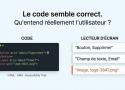
Guide rapide pour commencer à tester avec des lecteurs d'écran
N’importe qui peut prétendre faire un audit d’accessibilité numérique, alors comment faire confiance ?
L’expertise-conseil en accessibilité numérique n’est pas une profession ou activité réglementée. Dans la mesure où il s’agit d’une expertise et où on réalise des audits, on pourrait croire que le seul fait de proposer cette prestation suffit à ce que ce soit légitime. Pourtant, ce n’est pas le cas. Alors comment peut-on savoir si on fait appel à des prestataires de confiance ?
Je vous donne quelques pistes de réflexion : formations et certifications, expérience professionnelle, la façon de faire un audit, la possibilité de demander un exemple de grille et/ou rapport d’audit, tests à réaliser sur le site du prestataire lui-même.
A11y France
Association loi 1901
A11Y France fédère les personnes professionnelles de l'accessibilité numérique et les personnes concernées pour un numérique véritablement accessible à toutes et tous.
Accéder en anonyme
AI transparency sounds reasonable. But what happens when AI detection and watermarking systems cannot tell the difference between someone generating work with AI and a disabled person using AI as assistive technology?
In this video, I explain why AI watermarking and the EU AI Act have me concerned as a blind accessibility professional, app developer, person with ADHD, and heavy AI user.
AI helps me organize my thoughts, work with inaccessible information, understand images, read documents with OCR, create content, and communicate more effectively. For many disabled people, AI can function as assistive technology.
So what happens when a machine-readable signal simply says that AI was involved?
What happens when a blind person uses AI-powered OCR to read an inaccessible document?
What happens when someone with ADHD or dyslexia uses AI to organize their own thoughts?
What happens if an employer, school, publisher, or automated system sees an AI signal and assumes that person did not actually do the work?
I support transparency and protections against malicious uses of AI. But “AI was involved” does not automatically mean “AI did the work.”
Disabled people need to be part of this conversation while these policies and technologies are being designed — not after they create another barrier.
What do you think? Could AI watermarking unintentionally discriminate against disabled people?
If you think policymakers, AI companies, developers, educators, employers, and accessibility professionals need to hear this perspective, please share this video.