Daily Shaarli
July 26, 2026
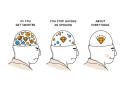
I stopped arguing with people and everything got easier
It happened because I calculated what arguments cost me, not because I don't have opinions.
Every argument offers two prizes: being right and being effective, but you rarely take both home.
So I decided to change this. I ask one honest question before I push back. I state my position once, with my reasons. And when facts won't change the outcome, I let the outcome do the teaching.
People mistake this for weakness. It takes more discipline to hold a position quietly than to defend it at all costs.
The thing is that 𝗺𝗼𝘀𝘁 𝗮𝗿𝗴𝘂𝗺𝗲𝗻𝘁𝘀 𝗮𝗿𝗲 𝗮𝗯𝗼𝘂𝘁 𝗲𝗴𝗼, 𝗻𝗼𝘁 𝗳𝗮𝗰𝘁𝘀, and you cannot beat another person's ego. They need to overcome it by themselves.
Some hills are worth dying on, but almost none are worth daily combat.
The energy I used to spend on winning debates now goes into work nobody can argue with.
A simpler and more flexible approach to consistency in event-driven systems
What is it?
Dynamic Consistency Boundaries (DCB) is a technique for enforcing consistency in event-driven systems without relying on rigid transactional boundaries.
Traditional systems use strict constraints to maintain immediate consistency, while event-driven architectures embrace eventual consistency for scalability and resilience. However, this flexibility raises challenges in defining where and how consistency should be enforced.
Introduced by Sara Pellegrini in her blog post "Killing the Aggregate", DCB provides a pragmatic approach to balancing strong consistency with flexibility. DCB allows for the selective enforcement of strong consistency where needed, particularly for operations that span multiple entities. This ensures critical business processes and cross-entity invariants remain reliable while avoiding the constraints of traditional transactional models. DCB helps teams optimize performance, scalability, and operational correctness by defining context-sensitive consistency boundaries.
Everyone is diving headfirst into the AI pool. The problem is they're diving into the shallow end. LLMs are being packed into every nook and crannie, mostly places nobody wanted it or asked for it. I'm going to be taking a baseball bat to LLMs - their hallucinatory nature and the extra instructions we're saddled with we don't get to see.. I'll be showing logs of how they literally talk themselves into lying to you. It's bad. Bring a helmet. Prompt engineering has become harness engineering, and now its "memory and context engineering". Openclaw and now codex are storing local files and 'memories' to try and handle the 'context window problem'. Moltbook has 3 million 'agents'. Openclaw is being used as a c2 now. TeamPCP is infecting every npm package they can with backdoors - weekly at this point! Just in 2026 alone we have more than tripled the number of supply chain bugs in tooling used in the LLM landscape The attack surface is growing so rapidly we can barely keep track of it. This talk will explore all this new attack surface, and cover some of the things you can do about it, and how to avoid the landmines and pitfalls when using LLMs.
Dan Tentler
Dan is the founder of Phobos Group, a boutique information security consulting and architecture firm, specializing in assessment work, security architecture, remediation efforts, advisory and simulation services. Dan's been at this a long time. Come talk to him about Phobos Airlock!
Security Fest is an inspiring and unique IT security conference held in Gothenburg, Sweden. The event is an excellent opportunity to learn more about IT security, and a great way to connect with both the renowned international speakers, and the other attendees.