TUTO : Créer son parcours d’apprentissage de 15 à 19 ans
OBJECTIF
Rendre les élèves autonomes et responsables dans leur parcours d’apprentissage
Pour les élèves de 15 à 19 ans (ou 1ère année post-diplôme)
Chaque carte propose un tutoriel de progression adapté au quotidien des lycéens : améliorer son organisation, gérer le stress, renforcer sa confiance, mémoriser efficacement, préparer son orientation.
Les élèves découvrent des stratégies concrètes pour apprendre à apprendre et gagner en autonomie.
Une pédagogie centrée sur la personne
Ce jeu de cartes repose sur une idée simple : un élève apprend mieux lorsqu’il comprend ce qu’il fait et pourquoi il le fait.
Les cartes TUTO encouragent la réflexion, la planification et l’action.
Elles favorisent la construction d’un parcours d’apprentissage personnalisé, où chacun avance à son rythme.



L'IA à l'école : bonne ou mauvaise idée ?
📖 CHAPITRES
- 00:00 Intro
- 00:57 1 : L'IA remplace les profs
- 03:21 2 : Réviser avec ChatGPT : mauvaise idée ?
- 06:57 3 : La meilleure méthode pour apprendre
- 09:47 4 : Est-ce que l'IA nous rend plus bêtes ?
- 14:11 5 : Interdire l'IA à l'école ?
- 17:15 Conclusion
🚰 SOURCES ET ATTRIBUTIONS
🔵 Intro
-
Alpha School, reportage CBS « Inside the $40,000 a year school » :
 • Inside the $40,000 a year school where AI ...
 -
France 24, la classe de CE1 avec IA :
• Dans cette école, l’IA révolutionne l’appr... -
Citation de Jonathan Haidt, « The Anxious Generation » (2024)
🔵 Chapitre 1
- Australie, réseaux sociaux interdits aux moins de 16 ans :
https://www.esafety.gov.au/about-us/i...
- France, interdiction votée pour les moins de 15 ans :
https://www.touteleurope.eu/societe/l...
- ChatGPT, 100 millions d'utilisateurs en 2 mois (analyse UBS) :
https://www.reuters.com/technology/ch...
🔵 Chapitre 2
- L'étude en Turquie, Bastani et al., « Generative AI Can Harm Learning » (Wharton/UPenn) :
https://papers.ssrn.com/sol3/papers.c...
-
Animation reprise de l'excellente chaîne Science Petr, « AI Is Frying Your Brain » :
• AI is frying your brain. -
Son guide pour transformer une IA en tuteur :
- L'étude d'Harvard, Kestin et al. (Scientific Reports, 2025) :
https://www.nature.com/articles/s4159...
- Démo Khanmigo, de Sal Khan : • How AI Could Save (Not Destroy) Education ...
🔵 Chapitre 3
- Daniel Kahneman, « Système 1 / Système 2 : Les deux vitesses de la pensée » (2011)
- Veritasium, conférence « What Everyone Gets Wrong About AI and Learning » : • Veritasium: What Everyone Gets Wrong About...
🔵 Chapitre 4
- L'étude du MIT, Kosmyna et al., « Your Brain on ChatGPT » :
https://arxiv.org/abs/2506.08872
- L'effet Google, Sparrow, Liu & Wegner (Science, 2011) :
https://www.science.org/doi/10.1126/s...
- Jonathan Haidt, « Into the Machine » : • Is AI making you stupid? w/Jonathan Haidt
🔵 Chapitre 5
- Chine, IA gelées pendant le gaokao (juin 2025) :
https://fortune.com/asia/2025/06/09/a...
- Décret présidentiel américain du 23 avril 2025 (Executive Order 14277) :
https://www.presidency.ucsb.edu/docum...
- Belgique, concours de médecine (La Libre) :
https://www.lalibre.be/belgique/ensei...
- Le mode étude de ChatGPT :
https://openai.com/index/chatgpt-stud...
- Le mode apprentissage de Claude :
https://www.anthropic.com/news/introd...
- L'apprentissage guidé de Gemini :
https://blog.google/products-and-plat... Miniature inspirée des excellentes chaînes Fern et AQuatre
- Objectif : Identifier les enjeux éthiques et environnementaux de l'IA
- Durée : 1 heure (adaptable)
- Public cible : élèves, étudiants, enseignants et formateurs
- Âge : à partir de 13 ans

« Ils me rendent des copies parfaites. Et à l'oral, ils ne savent pas les expliquer. »
Cette phrase, je l'ai entendue à chaque réunion de pré-rentrée cette année. Formulée autrement selon les intervenants, mais toujours avec le même agacement 😬
Alors soyons clairs sur un point : je ne suis pas contre l'IA. En cours, en TP, elle a sa place. Elle débloque, elle explique autrement, elle fait gagner du temps. Je ne l'interdis pas et je n'ai aucune envie de l'interdire.
Mais pendant une évaluation, la question n'est plus la même. Une évaluation sert à mesurer ce qu'un apprenant sait faire. S'il copie-colle, elle ne mesure plus rien du tout ❌
Et surtout, elle devient injuste. Ceux qui ont révisé, qui butent vingt minutes sur un exercice, et qui se retrouvent notés à côté d'une réponse produite en huit secondes. Ceux-là, on les décourage. C'est le vrai coût, et il est rarement chiffré dans les discussions sur l'IA.
Donc j'ai construit quelque chose pour mettre un terme à tout ça.
Un boîtier de la taille d'un livre de poche qui crée un réseau Wi-Fi le temps de l'épreuve.
→ Les apprenants s'y connectent. Rien à installer sur leurs machines, aucun réglage, aucun logiciel à accepter.
→ Ils s'identifient eux-mêmes, sur une page web dont j'écris l'adresse au tableau. Pas d'appel, pas de liste à cocher, et rien de caché : ils voient exactement ce que je vois d'eux.
→ Les services d'IA générative ne répondent plus. Le réseau refuse simplement de les joindre, une trentaine de domaines : ChatGPT, Gemini, Claude, Perplexity, et les outils de reformulation, qu'on oublie toujours alors que ce sont eux qui servent le plus.
→ Un écran me dit en direct qui est connecté et qui vient de quitter le réseau.
→ À la fin, un rapport horodaté, archivé, imprimable, lisible plusieurs semaines après si besoin.
Si vous êtes formateur, responsable pédagogique ou centre de formation et que ce problème vous parle, je suis curieux d'en discuter. Le montage est transposable ailleurs que chez moi, et je sais maintenant exactement ce qu'il demande.
(La capture du dashboard en commentaire est une démonstration : la séance, les noms et les appareils sont entièrement fictifs.)
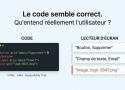
Guide rapide pour commencer à tester avec des lecteurs d'écran
Les chiffres clés · 2026
IA & Environnement
Les datacenters consomment déjà autant d'électricité que la France. 40 chiffres vérifiés sur ce que l'IA consomme et rejette, chacun relié à sa source.
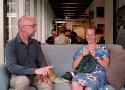
Felienne Hermans is full professor of Computer Science Education at the Vrije Universiteit Amsterdam.
Felienne is the author of the 2021 book The Programmer's Brain, a very readable and highly insightful introduction to the cognitive science behind how human brains learn programming. Why is programming hard to learn, and what can we do about that, both as learners and teachers? We recommended this for everyone, but it is particularly useful for those who just started to learn programming, as well as people who try to teach others.
Felienne’s most recent project is Hedy, a programming language aimed at beginners – including children – and that realises many of the insights from The programmer’s brain about why programming is hard to learn. Hedy is a “real” programming language in that it is unapologetically text-based, but the language design is gradual, progressing from an extremely lenient but incomplete language to a nontrivial subset of Python.
The language is under active development and constantly exposed to feedback from children who actually learn programming. We find this brilliant and are particularly impressed by the possibility of Hedy to teach some programming to everyone, rather than all programming to some people.
Un jeune développeur qui explique des concepts d'informatique.
J'aime bien le rythme et la direction artistique.
Abstract
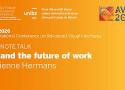
“AI is going to radically change creative work”, we hear all around us. But what is that creativity that needs to be disrupted? In this talk Felienne Hermans, professor of computer science education at VU Amsterdam, will examine technology’s worldview, one of control and dominance, of measurements and data, and examine how that worldview shapes their understanding of the world and of their software systems.
This keynote by Felienne Hermans asks: What type of knowledge do we lose if we adopt AI? What perspectives might be lost? And what does that mean for the future of work?

Jeu vidéo Android pour apprendre sur le sujet des dark patterns
Ce guide a été conçu dans le cadre du programme Alt Impact, co-porté par l’ADEME, le CNRS et Inria. Ce projet a pour ambition de former et de sensibiliser un large public aux enjeux de l’impact environnemental du numérique. Plusieurs cibles ont été définies pour accompagner la transition : le grand public, les organisations professionnelles publiques et privées, ainsi que les acteurs de l’enseignement supérieur et la recherche.Ce guide propose un inventaire de ressources pédagogiques disponibles au format « clé en main » ou adaptables selon vos besoins, afin de vous former ou de former différents publics à la sobriété numérique.
Ce document constitue le référentiel du numérique responsable pour l’éducation. Il s’inscrit
dans le corpus des référentiels de la doctrine technique du numérique pour l’éducation, et
dans la stratégie du numérique pour l’éducation qui rappelle l’ambition du ministère pour le
développement de la citoyenneté à l’ère du numérique tout autant que l’engagement nécessaire de chaque fournisseur de services numériques pour tendre vers un objectif commun de
développement durable.
Il recense les exigences et recommandations en matière d’écoresponsabilité, d’accessibilité
numérique, d’éthique et d’usage de l’IA pour l’ensemble des fournisseurs de services numériques pour l’éducation.
Il s’appuie sur des documents de référence généraux comme le RGESN ou le RGAA, le rapport de la commission « Écrans et enfants : à la recherche du temps perdu » et contextualise
les exigences au périmètre des services numériques pour l’éducation. Le ministère, ses fournisseurs de services ainsi que l’ensemble des partenaires et acteurs des services numériques
ont participé à l’élaboration de ce référentiel.
Dans le cadre de ce référentiel, il est entendu que le « numérique responsable » est un processus d’amélioration continue qui vise à réduire l’empreinte environnementale et sociale du
numérique1
. Sur le plan environnemental, il revendique une utilisation plus sobre et moins
énergivore de l’outil numérique en faisant évoluer les pratiques, les usages et les projets de
déploiement des équipements et services vers plus de sobriété, sans tomber dans l’austérité.
Sur le plan social, le numérique responsable vise à garantir l'inclusion numérique, l'accès équitable aux technologies et la protection des droits de l'homme. Cela inclut la lutte contre la
fracture numérique et la promotion de l'éthique numérique.
Sur le plan économique, le numérique responsable encourage des modèles d'affaires durables, la transparence financière et la création d'emplois éthiques. Il s'agit de promouvoir
une économie numérique qui contribue positivement au bien-être économique global.
The past 3 years of work in NLP have been characterized by the development and deployment of ever larger language models, especially for English. BERT, its variants, GPT-2/3, and others, most recently Switch-C, have pushed the boundaries of the possible both through architectural innovations and through sheer size. Using these pretrained models and the methodology of fine-tuning them for specific tasks, researchers have extended the state of the art on a wide array of tasks as measured by leaderboards on specific benchmarks for English. In this paper, we take a step back and ask: How big is too big? What are the possible risks associated with this technology and what paths are available for mitigating those risks? We provide recommendations including weighing the environmental and financial costs first, investing resources into curating and carefully documenting datasets rather than ingesting everything on the web, carrying out pre-development exercises evaluating how the planned approach fits into research and development goals and supports stakeholder values, and encouraging research directions beyond ever larger language models.
Clara explores whether learning to code is still worthwhile, offering crucial insights into the learning process and the future of programming.
Clara explains how to use AI effectively when learning to code or improving your programming skills, discusses the potential drawbacks of the concept “AI as a tutor” and its impact on the learning experience, both practically and emotionally. 📃 Read the research this video is based on about the "widening gap" here: https://dl.acm.org/doi/10.1145/363262...
- 0:00 what’s up with AI and learning?
- 0:32 the experiment
- 0:58 pssst... check out our student pack
- 1:13 student A (struggling)
- 2:11 unawareness of unawareness
- 2:26 student B (non-struggling)
- 3:36 the widening gap
- 4:23 a rule of thumb 👍
- 4:39 doing things slowly is better for learning
- 4:48 imposter syndrome
- 4:56 meh.
- 5:43 🤑getting things done
- 6:09 the good old days
- 6:36 how to use LLMs in learning
- 6:54 what have we learned?
- 7:13 the psychology of learning to code
- 7:20 please… please... the student pack
- 7:32 begging and conclusion

Here is a visualization of a Java program. Each big circle represents a Class. The initial size (mass) of the circle is proportional to the number of fields and methods in the class. Each time the class calls a method of another class, the mass of the class increases, and a small circle will spawn. If class A calls B.method(), the small circle will have the same color (color B) as the circle that represents class B. If there are lots of small circles with color B following circle A, then the force of attraction on circle B exerted by circle A will be big. (Circle B does not attract Circle A if there are no small circles with color A following Circle B).
Question: Can you tell by looking at the visualization as to how the methods in classes are interacting with each other?
would you be able to describe it?
Is it a good way to visualize coupling between classes?
Is it good for anything at all?
Thank you so much
Un e-book interactif bien fait pour apprendre les transformées de Fourier de façon beaucoup plus claire que sur Wikipedia.

2026-06-03
Je rassemble ici en trois paragraphes et neuf liens tout ce que j’ai écrit sur l’IA générative (IAG) dans la partie Blog de mon site depuis deux ans. Ceci donne un bon aperçu de ma position concernant l’IAG à la date de publication de ce billet. Je mets également ce texte dans ma page sur l’IA dans la partie Cours du site, et c’est là-bas que je ferai des mises à jour si besoin.