
Here is a visualization of a Java program. Each big circle represents a Class. The initial size (mass) of the circle is proportional to the number of fields and methods in the class. Each time the class calls a method of another class, the mass of the class increases, and a small circle will spawn. If class A calls B.method(), the small circle will have the same color (color B) as the circle that represents class B. If there are lots of small circles with color B following circle A, then the force of attraction on circle B exerted by circle A will be big. (Circle B does not attract Circle A if there are no small circles with color A following Circle B).
Question: Can you tell by looking at the visualization as to how the methods in classes are interacting with each other?
would you be able to describe it?
Is it a good way to visualize coupling between classes?
Is it good for anything at all?
Thank you so much



The OOP Interview Question That Breaks Everyone ! | Object-Oriented Programming (OOP) Explained | Tech Interview Prep
Want to understand Object-Oriented Programming (OOP) the right way? This complete guide goes beyond the basic textbook definitions of Encapsulation, Abstraction, Inheritance, and Polymorphism, diving deep into how OOP is used in real-world backend systems and enterprise architecture.
If you're preparing for software engineering interviews, learning system design, or tired of writing spaghetti code — this video will give you a clear, practical understanding of OOP principles, composition over inheritance, and the architectural trade-offs you must know.
We break down complex topics like Objects vs Classes, the Diamond Problem, Entity-Component-Systems (ECS), and the 4 Pillars in a highly visual, easy-to-understand way.
🔥 What you'll learn in this Object-Oriented Programming tutorial:
00:00 — The Interview Trap (Why memorizing the 4 pillars isn't enough)
01:27 — Objects, Classes & Constructors explained visually
03:52 — Encapsulation (Protecting state & data hiding)
05:37 — Abstraction (Managing complexity & interfaces)
06:55 — Inheritance (Code reuse & the "Is-A" relationship)
08:56 — Polymorphism (Method overriding & overloading)
10:45 — Composition over Inheritance (The Entity-Component-System pattern)
13:49 — OOP Trade-offs & Common Developer Misconceptions
16:10 — The Complete Picture & Final Summary
💬 Join our Community: Join our Discord for coding discussions, resources, and community vibes: / discord
☕ Support the Channel: If you found this video helpful, consider supporting the channel!
Buy me a Coffee: https://ko-fi.com/csmadeez
Buy me a Chai (Indian Audience): https://buymeachai.ezee.li/CsMadeEz
💡 Keywords covered (for learning & interviews):
Object-Oriented Programming, OOP Tutorial, 4 Pillars of OOP, Encapsulation, Abstraction, Inheritance, Polymorphism, Composition vs Inheritance, System Design Interview, Software Engineering, Backend Development, Java OOP, TypeScript OOP, Clean Code, Programming Basics
🎯 This video is perfect for:
Backend developers (Java, Python, TypeScript, C#)
Full stack developers wanting to write cleaner code
Students preparing for tech interviews & system design rounds
Anyone struggling to bridge the gap between OOP theory and real-world application
⚠️ By the end, you’ll understand:
How OOP principles work in real enterprise systems
When to use Inheritance vs Composition (and why Composition usually wins)
Common architectural mistakes junior developers make
How to answer advanced OOP questions in technical interviews
📈 Search-friendly topics covered:
OOP concepts in Java/TypeScript
java oop
4 Pillars of Object-Oriented Programming
Composition over inheritance explained
Software engineering interview preparation
How to write clean object-oriented code
Object-oriented programming for beginners
👍 Like, share & subscribe for more deep-dive engineering tutorials!
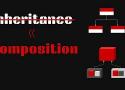
Why the Best Codebases Barely Use Inheritance Anymore ? | Composition vs Inheritance Explained
Stop struggling with inheritance vs composition. What actually happens to your codebase when requirements change?
In this video, we break down the fundamental concepts of software architecture and explore why relying on deep class hierarchies often leads to fragile code. We contrast this with the modular approach of composition, treating your components like LEGOs.
Understanding these coding design patterns is essential if you want to write clean code that scales. Whether you are learning object oriented programming or preparing for system design interviews, this tutorial gives you a concrete strategy to avoid common pitfalls.
We simplify concepts like class hierarchies, code reuse, abstract methods, interface contracts, loose coupling, and even touch on Dependency Injection using a practical, real-world architecture example. Subscribe for weekly software development tips and let us know in the comments: do you prefer composition or inheritance in your current projects?
🔥 What you'll learn in this Object-Oriented tutorial:
00:00 — Intro
00:28 — Member Shoutouts
00:43 — The Code Reuse Problem
01:05 — What is Inheritance?
02:12 — Where Inheritance Breaks
04:24 — What is Composition?
06:08 — What is an Interface?
07:35 — What is Dependency Injection?
08:11 — When to use Inheritance
09:15 — Summary & Takeaways
💡 Keywords covered (for learning & interviews):
Composition over Inheritance Object-Oriented Programming OOP Concepts Software Architecture System Design Interfaces Dependency Injection Loose Coupling Code Reuse Clean Code Refactoring
🎯 This video is perfect for:
Backend and frontend developers (Java, C#, TypeScript, Python, C++)
Software engineers trying to write cleaner, more maintainable code
Students learning Object-Oriented Programming and Design Patterns
Anyone struggling with deep, messy class hierarchies
⚠️ By the end, you'll understand:
Why traditional inheritance makes code fragile
How composition solves the fragile base class problem
Why interfaces are crucial for abstraction
How to decouple your code using dependency injection
When inheritance is actually the right tool for the job

Jim Coplien believes that we have done OOP the wrong way for 40 years, and suggests an approach to reflection based on the DCI paradigm and influenced by the human society.