Un générateur de site statique avec interface wyswyg fait en java/quarkus avec live preview et hot reload.
—-
Roq and its themes include several built-in features for SEO, feeds, and discoverability. The base theme provides the essential tags (SEO, favicon, Web Bundler), while the default theme builds on top of it with a full layout, dark mode, sidebar, and more. If you are using either theme, most of these features are already enabled. Configure them through your site index frontmatter or by adding content files.
For details on each feature, see the Base Theme, Favicon, SEO, Analytics, RSS, and LLMs.txt sections in the basics guide.



LLMs have been trained on decades of freely available Java specifications, including JSRs, JEPs, MicroProfile and Jakarta EE. They know the patterns. They know the standards. Now let's put them to work. In this live coding session, we'll use LLM agents to build production-ready Java applications quickly. No slides, no theory - just real code, real prompts, and real results. We'll start with a typical enterprise requirement and demonstrate how to guide LLMs to generate clean, maintainable Java code following BCE/ECB architecture patterns that actually work in production. You will learn how to effectively access the LLM's in-depth knowledge of Java specifications, how to continuously improve the generated code with each iteration, and how to maintain a high velocity without creating a mess. Expect live coding, real-world scenarios from actual projects, and honest discussion about where LLMs excel and where human expertise remains crucial. Bring your questions - we'll solve them with code.
Guidelines for Agentic development.
"Put your AI on rails."
BCE architecture · Java · Web standards
Adam Bien

This session is about practical, no-nonsense coding. We'll explore lean Java 21+ practices and patterns that eliminate bloat and hacks that increase productivity. We will start with structuring and organizing backend monoliths and microservices, cover testing, then move on to decoupling, abstractions, Data Oriented Programming, automation with pure Java and the impact of LLM assistants on design and code structure.
Your questions and scenarios are not only welcome, they're essential.
Adam Bien

The OOP Interview Question That Breaks Everyone ! | Object-Oriented Programming (OOP) Explained | Tech Interview Prep
Want to understand Object-Oriented Programming (OOP) the right way? This complete guide goes beyond the basic textbook definitions of Encapsulation, Abstraction, Inheritance, and Polymorphism, diving deep into how OOP is used in real-world backend systems and enterprise architecture.
If you're preparing for software engineering interviews, learning system design, or tired of writing spaghetti code — this video will give you a clear, practical understanding of OOP principles, composition over inheritance, and the architectural trade-offs you must know.
We break down complex topics like Objects vs Classes, the Diamond Problem, Entity-Component-Systems (ECS), and the 4 Pillars in a highly visual, easy-to-understand way.
🔥 What you'll learn in this Object-Oriented Programming tutorial:
00:00 — The Interview Trap (Why memorizing the 4 pillars isn't enough)
01:27 — Objects, Classes & Constructors explained visually
03:52 — Encapsulation (Protecting state & data hiding)
05:37 — Abstraction (Managing complexity & interfaces)
06:55 — Inheritance (Code reuse & the "Is-A" relationship)
08:56 — Polymorphism (Method overriding & overloading)
10:45 — Composition over Inheritance (The Entity-Component-System pattern)
13:49 — OOP Trade-offs & Common Developer Misconceptions
16:10 — The Complete Picture & Final Summary
💬 Join our Community: Join our Discord for coding discussions, resources, and community vibes: / discord
☕ Support the Channel: If you found this video helpful, consider supporting the channel!
Buy me a Coffee: https://ko-fi.com/csmadeez
Buy me a Chai (Indian Audience): https://buymeachai.ezee.li/CsMadeEz
💡 Keywords covered (for learning & interviews):
Object-Oriented Programming, OOP Tutorial, 4 Pillars of OOP, Encapsulation, Abstraction, Inheritance, Polymorphism, Composition vs Inheritance, System Design Interview, Software Engineering, Backend Development, Java OOP, TypeScript OOP, Clean Code, Programming Basics
🎯 This video is perfect for:
Backend developers (Java, Python, TypeScript, C#)
Full stack developers wanting to write cleaner code
Students preparing for tech interviews & system design rounds
Anyone struggling to bridge the gap between OOP theory and real-world application
⚠️ By the end, you’ll understand:
How OOP principles work in real enterprise systems
When to use Inheritance vs Composition (and why Composition usually wins)
Common architectural mistakes junior developers make
How to answer advanced OOP questions in technical interviews
📈 Search-friendly topics covered:
OOP concepts in Java/TypeScript
java oop
4 Pillars of Object-Oriented Programming
Composition over inheritance explained
Software engineering interview preparation
How to write clean object-oriented code
Object-oriented programming for beginners
👍 Like, share & subscribe for more deep-dive engineering tutorials!
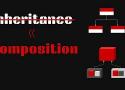
Why the Best Codebases Barely Use Inheritance Anymore ? | Composition vs Inheritance Explained
Stop struggling with inheritance vs composition. What actually happens to your codebase when requirements change?
In this video, we break down the fundamental concepts of software architecture and explore why relying on deep class hierarchies often leads to fragile code. We contrast this with the modular approach of composition, treating your components like LEGOs.
Understanding these coding design patterns is essential if you want to write clean code that scales. Whether you are learning object oriented programming or preparing for system design interviews, this tutorial gives you a concrete strategy to avoid common pitfalls.
We simplify concepts like class hierarchies, code reuse, abstract methods, interface contracts, loose coupling, and even touch on Dependency Injection using a practical, real-world architecture example. Subscribe for weekly software development tips and let us know in the comments: do you prefer composition or inheritance in your current projects?
🔥 What you'll learn in this Object-Oriented tutorial:
00:00 — Intro
00:28 — Member Shoutouts
00:43 — The Code Reuse Problem
01:05 — What is Inheritance?
02:12 — Where Inheritance Breaks
04:24 — What is Composition?
06:08 — What is an Interface?
07:35 — What is Dependency Injection?
08:11 — When to use Inheritance
09:15 — Summary & Takeaways
💡 Keywords covered (for learning & interviews):
Composition over Inheritance Object-Oriented Programming OOP Concepts Software Architecture System Design Interfaces Dependency Injection Loose Coupling Code Reuse Clean Code Refactoring
🎯 This video is perfect for:
Backend and frontend developers (Java, C#, TypeScript, Python, C++)
Software engineers trying to write cleaner, more maintainable code
Students learning Object-Oriented Programming and Design Patterns
Anyone struggling with deep, messy class hierarchies
⚠️ By the end, you'll understand:
Why traditional inheritance makes code fragile
How composition solves the fragile base class problem
Why interfaces are crucial for abstraction
How to decouple your code using dependency injection
When inheritance is actually the right tool for the job

Java a évolué.
Votre code peut aussi.
Une collection de snippets Java modernes. Chaque ancien pattern Java à côté de son remplacement moderne et propre — côte à côte.

Joular Code - Java is a lightweight and efficient Java agent for monitoring the energy consumption of methods and execution branches at the source code level.
This project is part of Joular Code, and is the successor of JoularJX.
🚀 Features
Monitor power consumption and energy of each method and execution branch at runtime
Works as a Java agent — no source code instrumentation or modification needed
Samples the JVM stack at high frequency (default: every 10 ms) and attributes energy every second
Supports three power data source backends from Joular Core:
Shared memory ring buffer (IPC) — lowest latency, recommended
CSV file — file-based polling
HTTP endpoint — remote or containerized setups
Generates CSV files with per-method and per-branch power (Watts) and energy (Joules)
Produces two output sets: one for all methods (including JDK internals), one filtered to your application packages
Configurable method filtering by package/class prefix to focus energy data on your code
Cross-platform: Windows, macOS, Linux, and Raspberry Pi

Achieve Efficient Maintainable and Simple Java Exception handling killing those anti-patterns.