



Les chatbots soignent la dépression, mais attention !
L’IA se révèle étonnamment efficace pour traiter l’anxiété et la dépression. Des études sérieuses montrent des résultats concrets.
Mais il y a un revers à la médaille : atteintes à la vie privée, dépendance et risque de remplacer le contact humain par du code.
Cet épisode analyse les points forts et les risques de la thérapie par IA, et explique pourquoi des millions de personnes y ont recours malgré tout.
Tired of drowning in student debt for outdated education? Discover ten completely free university courses that deliver better career outcomes than expensive degrees costing hundreds of thousands. From MIT's computer science program to Yale's psychology lectures, these world-class educational resources are available right now without application fees, student loans, or four years of your life. Perfect for career changers, ambitious professionals, and anyone seeking high-quality skills training without the financial burden. Learn cutting-edge technology, finance, cybersecurity, and business management from Nobel Prize winners and industry pioneers who actually know what employers want. These aren't watered-down versions - they're the exact same courses taught at prestigious universities, minus the inflated price tags and unnecessary requirements. Whether you're interested in machine learning, game development, or web security, these free alternatives provide practical skills that translate directly into job opportunities. Stop paying premium prices for mediocre education when world-renowned institutions are giving away their best content. Transform your career prospects without sacrificing your financial future or spending years in outdated classroom settings.

Note taking
How To UPGRADE iPad Note Taking (With Science) - YouTube
Mal
- trop verbeux
- très linéaire
True knowledge is not linear
Mais pas évident d'enseigner autrement que linéairement.
Besoin de réencoder de façon non-linéaire
Représenter de façon non linéaire
Penser de façon non-linéaire
Des choses changent dans la façon de prendre des notes
=Higher order learning
- Rechercher constamment des relations
- contamment créer des groupes basés sur ces relations
- constamment créer des relations entre les groupes
- Essayer d'xprimer en quoi ca s'articule avec la vison globale
- et comment l'exprimer de la façon la plus simple possible
- nettoyer au fur et à mesure pour simplifier
- moins de mots
- le faire pendant la prise de note, pas après
- on peut exprimer beaucoup de choses avec juste l'arrangement, et les choses et l'espace
- show instead of explain
app with infinite canvas like "Concept" or "Freeform"
Importance de processing pendant la prise de note

Yanis Varoufakis et Tim Nguyen, chercheur chez Google DeepMind, débattent de l'essor des géants de la technologie, de la fin de la vie privée et de la corruption de la société.
Les géants de la technologie sont-ils hors de contrôle ?
De Karl Marx à Elon Musk, nombreux sont ceux qui ont affirmé qu'entre de bonnes mains, la technologie est une force libératrice et porteuse de bien. Mais cette idée est de plus en plus remise en question, des personnalités comme Obama et Tim Berners-Lee mettant en garde contre les graves menaces que représentent les géants de la technologie pour l'autonomie et la liberté. Par conséquent, nombreux sont ceux qui affirment aujourd'hui qu'il est nécessaire de se libérer des géants de la technologie et de leur caractère addictif. Mais on ignore si cela est réalisable. Les critiques affirment que les géants de la technologie, par le biais des algorithmes et des données, manipulent nos actions et nos choix dans tous les aspects de notre vie, si bien que l'autonomie humaine est déjà radicalement compromise. Se retirer est quasiment impossible. Des études de Cambridge montrent que les plateformes anti-technologie, prétendant lutter contre la dépendance aux géants de la tech, ne font souvent que la reproduire sous une autre forme.
Faut-il en conclure que la technologie a porté atteinte à notre liberté et que nous ne maîtrisons plus nos décisions et nos comportements ? Devons-nous faire évoluer les droits numériques pour résister à la manipulation et garantir l'autonomie, et cela fonctionnera-t-il ? Ou le démantèlement ou l'interdiction des géants de la tech pourrait-il faire partie de la solution, nous permettant de reconquérir notre autonomie ?
Yanis Varoufakis est un économiste, universitaire et homme politique de renommée mondiale. Son dernier ouvrage s'intitule « Technofeudalism: What Killed Capitalism ». Timothy Nguyen est un chercheur de premier plan en IA chez Google DeepMind et anime le podcast « The Cartesian Café ». Janne Teller est une auteure de romans, d'essais et de nouvelles saluée par la critique. Son œuvre aborde des thèmes existentiels à grande échelle, qui suscitent souvent des débats controversés. Animé par Shini Somara. L'Institut des Arts et des Idées présente des vidéos et des articles de penseurs d'avant-garde discutant des idées qui façonnent le monde, de la métaphysique à la théorie des cordes, de la technologie à la démocratie, de l'esthétique à la génétique. Abonnez-vous dès aujourd'hui ! https://iai.tv/subscribe?utm_source=Y...

HighYield x SemiAnalysis deep-dive into AI Datacenters, Gigawatt Megaclusters and the Hyperscaler race to AGI.
How AI Datacenters Eat the World. SemiAnalysis Datacenter Anatomy Series:
Part 1: https://semianalysis.com/2024/10/14/d...
Part 2: https://semianalysis.com/2025/02/13/d...
SemiAnalysis Datacenter Industry Model: https://semianalysis.com/datacenter-i...
- 0:00 Intro
- 1:52 Datacenter Origins
- 2:53 Datacenter Location
- 4:06 AI Datacenters
- 5:08 AI Datacenter - Connectivity
- 7:17 AI Datacenter – Compute & Rack Power
- 11:40 AI Datacenter – Air & Liquid Cooling
- 14:32 AI Datacenter – Critical IT Power
- 17:50 SemiAnalysis Datacenter Anatomy
- 18:58 Texas Datacenter Mystery
- 21:26 AI Hyperscalers, Gigawatt Megaclusters & Nuclear Power
- 26:09 Satellite Images & SemiAnalysis Datacenter Industry Model
- 28:24 The Future of AI Datacenters
Guide "beginner friendly" pour WCAG.
Dans ce qui semble être l'équivalent du FALC (Facile À Lire et à Comprendre).

The Sustainable Web Interest Group published today a first public Draft Note of Web Sustainability Guidelines (WSG).
The digital industry is responsible for 2-5% of global emissions, more than the aviation industry. The Web Sustainability Guidelines (WSG) cover a wide range of recommendations to make web products and services more sustainable.
These guidelines use planetary, people, and prosperity principles (the PPP approach) throughout the decision-making process, allowing users to minimize their environmental impact in various ways. These include user-centered design, performant web development, carbon-free infrastructure, sustainable business strategy, and, supported by measurability data, various combinations thereof.
…
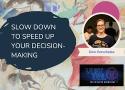
Software teams often reach for Kubernetes or similar prepackaged answers as default solutions to complex problems. But Kubernetes isn’t a strategy—it’s a tool. Using it prematurely can bury your team in unnecessary complexity and unwanted consequences. These ‘default’ answers reflect a deeper issue: we don’t understand the problem we're solving.
Through real-world examples, we’ll discuss how to think critically about the way decisions are being made in your company. We’ll introduce concepts like participation theater—when people perform the rituals of decision-making without making real decisions—alongside problem restatement as a tool to uncover the real challenge at hand. We’ll also examine different types of decisions (reactive vs. proactive, reversible vs. irreversible) and why recognizing them early changes how you should approach them.
This talk is a call to slow down to speed up your decision-making. Whether you're an engineer, architect, or tech lead, this session will challenge you to pause before reaching for Kubernetes (or other technologies) and instead ask: what problem am I really trying to solve?
About Gien
Gien Verschatse is an experienced consultant and software engineer that specialises in domain modelling and software architecture. She has experience in many domains such as the biotech industry, where she
specialised in DNA building. She's fluent in both object-oriented and functional programming, mostly in .NET. As a Domain-Driven Design practitioner, she always looks to bridge the gaps between experts, users, and engineers.Gien is studying Computer Science at the OU in the Netherlands. As a side interest, she's researching the science of decision-making strategies, to help teams improve how they make technical and organisational decisions. She shares her knowledge by speaking at international conferences.And when she is not doing all that, you'll find her on the sofa, reading a book and sipping coffee.

Attempting to parse HTML with regular expressions is an infamous pitfall, and a great example of using the wrong tool for the job. It's generally accepted to be a bad idea, for a multitude of reasons.
There's this famous Stack Overflow answer about why you should never, ever do it. In fact, this answer got so popular that it was used like a copypasta in some circles. Every time I stumbled upon it, I would think how there's a lot of truth in it - but at the same time, I couldn't agree in full...
But... can't you, really?

It’s commonly understood that automated accessibility testing tools can find around 20-30% of accessibility issues, but what does this actually mean in practice? Beau takes a closer look at these tools using specific examples, demonstrating the types of accessibility issues automated testing tools won't find, why that is the case, and how they could be giving you a false sense of accessibility.
About the speaker
Beau is the Technical Lead for TTC Global's Digital Accessibility Practice, and formerly the Lead Auditing and Testing consultant for the digital accessibility team at Vision Australia. Beau has been working in digital for 20 years, as an accessibility consultant since 2019, and formerly as a Web Developer and Senior/Lead Front End Developer for digital agencies in Melbourne.

Disclaimer: This post is not about lighthouse, other testing tools perform similarly. It's about us developers and our responsibility to not thoughtlessly rely on automatic testing.
It’s always nice to see when people post their Lighthouse scores on social media to highlight how well they’ve optimised their own or their client's website. It shows that they care about the quality of what they build.

Trisha Gee
Observability as the key to performance tuning Software Delivery
The golden rule of application performance tuning: measure, don’t guess. Yet when it comes to developer productivity, too many teams still guess. Builds are slow, tests are flaky, CI feels overloaded—and the default response is to throw hardware at the problem or hope it goes away.
In this talk, we’ll apply the performance engineering mindset to developer experience, showing how observability data from Develocity can profile builds and tests just like applications. By measuring and optimizing build and test performance, teams directly improve the DORA metrics that matter: shorter lead time for changes, lower change failure rates, faster recovery, and higher deployment frequency.
Developer productivity is a performance problem. If you want faster delivery and happier developers, the path is the same as for applications in production: measure first, then optimize.

Achieve Efficient Maintainable and Simple Java Exception handling killing those anti-patterns.

Todo : il y a des bonnes citations à relever

What happens if we can't make another CPU...ever?
What fails first? How long would datacenters last? Does the Internet start to fracture?
Of course, it's a hypothetical thought experiment. But it's interesting to think what chips will stand the test of time, and which might fail sooner than you think!
Here are the other channels I mentioned, take a look:
@jeriellsworth made microchips at home, and is an excellent engineer + teacher, go check her out!
/ @jeriellsworth
@KazeN64 is doing wild optimizations with N64 hardware:
/ @kazen64

https://m.youtube.com/watch?v=S1lKWW7K5r4&pp=ugUHEgVlbi1HQg%3D%3D
You're too intelligent to take action (Why overthinkers can't execute)
You’re not lazy.
You’re not unmotivated.
You’re just stuck in strategy mode, and your intelligence might be making it worse.
In this video, I’ll show you:
– Why overthinkers struggle to act
– The hidden skillset most people never train
– What schools, courses, and work environments got wrong
– And how professional athletes train the exact skill you’re missing
If you’re tired of planning and want to finally execute, this is for you.
0:00 - Why smart people struggle to act
0:41 - The trap of intelligence and strategy
1:36 - What happens during execution
2:57 - My personal story of getting stuck
3:50 - Meet the Strategist and Performer
5:00 - The skill gap that blocks progress
6:07 - The athlete mindset we need to steal
7:15 - Why your plans always collapse
9:10 - The emotional cost of taking action
10:20 - Fake actions and avoidance traps
11:45 - Why you're stuck in the Strategist Loop
13:00 - What the Performer really experiences
14:00 - The hidden performance state
15:00 - Create plans for real-world execution
16:00 - The exposure vs overwhelm curve
17:30 - Train your Performer like a firefighter
18:20 - How misalignment ruins your progress
19:40 - Building a healthy internal partnership
21:00 - What your Performer really needs
22:00 - The power of simple rules
23:30 - Coaching example: Helen's first post
25:30 - Final thoughts + free assessment link

The AI Bubble Is About to Pop
Sam Altman, the CEO of OpenAI, recently admitted that the AI boom might actually be a bubble — just like the Dot-com crash when trillions vanished almost overnight. Today, the world is pouring trillions into chips, data centers, and hype-fueled AI startups… but what happens when the returns don’t show up?
In this video, we break down exactly how the AI bubble formed — and what could happen when it bursts:
⏱ Chapters
0:00 Sam Altman’s Bubble Warning
0:52 Stocks Run on Vibes
1:47 Trillions Burned on Chips
2:49 The Energy Wall
3:58 The Tech Is Brittle
5:20 The Psychology Trap
6:37 The Venture Bubble Mechanics
7:23 What Survives After the Pop
8:00 Free Budget Tracker(Template)
From trillion-dollar spending and fragile tech to rising energy costs and companies chasing hype over results, this is the real story of the AI bubble — and what might be left standing after it pops.
👉 Do you think AI is the future, or is it already a bubble waiting to burst? Drop your thoughts in the comments.
If you enjoy deep dives into money, business, tech, and the economy, make sure to subscribe for more videos like this.

John Oliver discusses ABC’s move to pull Jimmy Kimmel off the air, what it has to do with Brendan Carr and the FCC, what it means for free speech in the United States, and which broadcasting giant should open an Italian restaurant. Ok fine: it’s Tegna. With a name like “Tegna” you’ve just gotta serve complimentary garlic knots. End of discussion.
