A Modern IAM Built or Distributed Systems
FerrisKey is an open-source, cloud-native Identity & Access Management platform designed for Kubernetes, multi-tenancy, and modern security architectures.



Cours et infos sur Guillaume Chetard. Docteur et enseignant en droit pénal.
Abstract
Rising air temperatures are the main reason for the expected reduction in land suitability for coffee cultivation under climate change in Central America. One of the reasons farmers use shade trees is to create a cooler microclimate in coffee plantations located in warming areas; therefore, adjusting the shade levels could alleviate future high temperatures. Even though data on expected climatic changes are available, no studies have addressed the cooling potential of shading in coffee production systems. In this study, we use regional climate information (RCP 4.5) and a simple shade model to explore the potential of shading as an adaptation practice in the coffee areas in Central America. A model was developed to estimate the required shade levels for Coffea arabica L. based on mean air temperature. Modeled and observed shade data were compared. Results indicate that compared to 2000, an overall increment of 23 ± 18% of shading would be required to alleviate the warming conditions by 2050. The shading will be more beneficial to coffee areas at medium and high altitudes than to areas at low ones. Also, the number of coffee areas that require dense shade levels (shading > 60%) may double by 2050. This would lead to a boost in tree biomass (carbon content) but also increase the competition for the coffee plants and consequently affect coffee yields. Trade-offs between adaptation, mitigation, and productivity objectives are expected in the coffee areas in the future.
Graphical abstract

Keywords
Climate risk
;
Climate suitability
;
Coffee sustainability
;
Ecological modeling
;
Decision support tool
;
Missing climate data

💫 Pour tout ceux qui travaille sur le #RIA (#AIAct), cette mise à jour est pour vous !
🔄Le texte ayant évolué durant l'été, notamment avec les modifications introduites par l’#Omnibus, cette version a été enrichie et mise à jour pour en tenir compte.
📅 À retenir notamment : le calendrier d’application évolue, avec un report au 2 décembre 2027 pour les obligations relatives aux systèmes d’IA à haut risque, sous réserve des conditions prévues par le texte.
Comme la première version, ce document vise à faciliter la lecture et l’appropriation du règlement, en rassemblant dans un même support le texte, ses définitions, les considérants, les différentes mesures d’application ainsi que des ressources complémentaires.
Deux ans après sa première publication, l’objectif reste le même : rendre un texte complexe plus accessible et plus exploitable.
📑 La nouvelle version est disponible sur #HAL : https://lnkd.in/eH4MQeAs et vous trouverez le sommaire, ci-dessous.

Outil GTD qui semble fonctionner pour JB Rainsberger
Données sensibles
Facturation électronique : « Évitons la catastrophe ! »
TRIBUNE. Alors que les cyberattaques se multiplient, l’État s’apprête à centraliser l’intégralité des données comptables de l’économie française. Une aberration pour Quentin Adam, le PDG de Clever Cloud qui souhaite un moratoire.
Publié le 26 août 2026 à 19h45

Quentin Adam, cocréateur de l'entreprise Clever Cloud. DR
Quentin Adam est cofondateur et PDG de Clever Cloud, entreprise française spécialisée dans l’hébergement et l’automatisation des infrastructures cloud. Cette dernière est passée en quinze ans d’une poignée d’ingénieurs à une centaine de salariés, présente commercialement en Europe et à l’international avec des clients dans 120 pays, et qui opère une dizaine de zones dans le monde.
Alors qu’il s’apprête à débattre lors de la REF (la Rencontre des Entrepreneurs de France, grand rendez-vous de rentrée organisé à Roland-Garros), il y défend un cloud humaniste, où la technique se juge à ce qu’elle fait aux gens : la vie privée traitée comme un droit et pas comme une option payante, des clients qui restent propriétaires de ce qu’ils confient, aucune revente de données ni sous-traitance opaque. Il porte depuis des années les combats de la souveraineté numérique européenne, de la protection des données personnelles et d’une commande publique qui cesse de financer sa propre dépendance.
À lire aussi
Facturation électronique : la grande bascule
Si cette prise de parole tombe à un moment aussi critique, c’est qu’elle percute de plein fouet une actualité alarmante. Les cyberattaques en série qui frappent nos institutions prouvent de manière vertigineuse que la centralisation des données est une faille systémique. L’incapacité de l’État à protéger ses coffres-forts numériques est flagrante : lorsque les bases de l’ANTS fuient, c’est l’identité de millions de citoyens qui se retrouve exposée. Plus glaçant encore, les récents piratages de la Fédération Française de Tir ont eu des répercussions désastreuses dans le monde réel, entraînant des cambriolages très ciblés au domicile de tireurs sportifs pour y dérober des armes.
L’insécurité numérique engendre désormais une violence physique. Alors que l’administration intensifie ses exigences de centralisation fiscale et demande un accès toujours plus fin aux rouages économiques des sociétés, ce décalage devient préoccupant : comment exiger des entreprises qu’elles livrent le cœur de leur modèle d’affaires à des systèmes dont l’étanchéité n’est pas encore garantie ?
Quentin Adam est lauréat de notre Palmarès des inventeurs qui distingue les Françaises et les Français qui s’appuient sur la science pour changer le monde. Nous l’avions interviewé à plusieurs reprises sur la dépendance du stockage de vos données par d’autres acteurs. Un combat pour la souveraineté qu’il résume souvent ainsi : « Le plus grand combat aujourd’hui, ce n’est pas contre les géants du numérique, c’est contre l’idée que nous ne pourrions pas construire une alternative. » Aujourd’hui il s’alarme des cyberattaques à répétition et plaide pour un sursaut technologique européen. Voici sa tribune.
« Le 1er septembre, dans neuf jours, la France commencera à faire transiter la comptabilité de ses entreprises par cent trente opérateurs privés agréés, au terme d’une année où cinq de ses propres fichiers sont tombés.
Février, FICOBA, le fichier national des comptes bancaires, 1,2 million de comptes consultés ; avril, les données d’élèves de l’Éducation nationale, puis le portail de l’ANTS et ses 11,7 millions de comptes ; juillet, les fichiers de personnels de l’Éducation nationale, numéro de sécurité sociale compris ; juin et juillet, la DGFiP, révélé le 14 août, 678 000 dossiers dont 286 000 professionnels. Cinq fois le même mode opératoire, l’usurpation des identifiants d’un agent public (cinq fois, ce n’est plus de la malchance). Et pour la DGFiP, un détail qui devrait tous nous arrêter : les identifiants volés étaient ceux d’un agent ET d’un tiers habilité.
Le 19 août, le Premier ministre écrivait à ses ministres que « peu de ministères sont au niveau requis » et que « ce n’est pas acceptable » (les mots sont de lui, pas de moi). Deux mois plus tôt, la Commission européenne renvoyait la France devant la Cour de justice pour n’avoir toujours pas transposé la directive NIS 2, exigible depuis octobre 2024.
L’État n’ignore pas ses insuffisances, et c’est tout l’intérêt : sa direction interministérielle du numérique doit céder la place à une autorité nouvelle, ARIANE, chargée de reprendre l’architecture technique de ses systèmes. Elle n’existe pas encore, son périmètre se discute toujours, mais le changement de direction de la DINUM montre une vraie volonté de changement, et son premier chantier sera de réparer ce qui vient de céder. On ne branche pas la comptabilité d’un pays sur une gouvernance en chantier.
Nous avons déjà eu cette discussion, en 1974
En mars 1974, Le Monde révélait sous le titre « SAFARI ou la chasse aux Français » un projet d’interconnexion des fichiers de l’État autour d’un identifiant unique : le numéro de sécurité sociale. Le scandale fut tel que Pierre Messmer retira le projet et institua une commission dont sortirent la CNIL et la loi Informatique et Libertés, dont l’article premier tient en une ligne : l’informatique « ne doit porter atteinte ni à l’identité humaine, ni aux droits de l’homme, ni à la vie privée, ni aux libertés individuelles ou publiques ». Ce que la France a compris en 1974, c’est que la centralisation est dangereuse par construction, indépendamment des intentions de celui qui centralise. Cinquante-deux ans plus tard, nous refaisons SAFARI (pas sur les personnes cette fois, sur les entreprises), et personne n’a rien dit. Reste à savoir pourquoi cet enseignement, payé assez cher pour finir dans la loi, ne vaut plus dès qu’il s’agit d’entreprises.
À lire aussi
Piratage : les cinq règles d’or pour protéger vos données
Car voici ce qui remonte. Dès septembre 2026, l’administration reçoit facture par facture l’identité des parties, les montants, la TVA et les données de paiement ; en septembre 2027 s’y ajoute le détail ligne à ligne, dénomination du bien, quantité, prix unitaire. Soyons honnête sur le périmètre (les ventes aux particuliers ne remontent qu’agrégées par jour, sans donnée client). Dans un an, l’État disposera du détail contractuel continu de tous les échanges inter-entreprises réalisés en France.
À qui profite l’information ?
On pose toujours ce débat en termes de vie privée, alors qu’il est de nature économique. Entre entreprises françaises, on s’y est habitué et ça finit par fonctionner : mon concurrent lyonnais connaît mes marges, je connais les siennes, la symétrie amortit le coup. Ça ne veut pas dire que c’est sain, ça veut dire que nous avons appris à vivre avec. Ça devient sérieux à la frontière. Les 125 700 entreprises françaises qui exportent, chiffre record atteint fin 2025, affrontent des concurrents dont elles ne sauront jamais rien : aucune PME américaine non cotée ne publie ses comptes, ni une société suisse, ni une japonaise, et une LLC du Delaware à deux cents millions de dollars de chiffre d’affaires n’adresse à son État qu’un chèque de trois cents dollars. Nous envoyons nos boîtes négocier avec leur bilan agrafé sur le front, face à des gens masqués. Elles sont une minorité, et c’est pourtant d’elles que viendra la croissance qui nous manque. Les fragiliser à ce moment précis n’est pas une maladresse administrative, c’est une décision qui se paiera en parts de marché.
Il y a pire que le concurrent, parce que le concurrent, au moins, fabrique quelque chose. Une étude de la FTC menée sous pouvoir de contrainte sur vingt-deux entités vivant de la seule assertion de brevets établit que le montant qu’elles réclament est calibré EN DESSOUS des frais de justice d’une phase initiale, au niveau exact où il revient moins cher de payer que de se défendre. Management Science montre que la probabilité d’être visé passe de 4,4 % à 17 % quand la trésorerie de la cible augmente d’un écart-type.
À lire aussi
Piratage des données des Français : « Ce n’est que le début »
Que les investisseurs exigent de la visibilité au-dessus d’une certaine taille est légitime, et je ne plaide pas pour l’opacité (une économie sans information est une économie sans financement). Alors que Philippe Aghion vient d’être récompensé par le prix Nobel d’économie pour ses travaux sur l’innovation et la destruction créatrice, exposer gratuitement l’avantage compétitif d’une entreprise à ses concurrents étrangers revient précisément à lui retirer une partie des ressources qui lui permettent d’innover. Chaque million versé pour solder une réclamation sort de l’autofinancement, dans un pays dont la croissance acquise à la mi-année plafonne à 0,5 % : c’est de l’investissement en moins, pas du profit en moins.
Aucune étude n’a jamais testé si la facilité d’accès aux comptes amplifie ce ciblage. Mais une industrie qui choisit ses proies sur leur capacité à payer se prive difficilement d’une base gratuite qui lui donne exactement ça, et la France est le pays où cette base est la moins chère : l’Italie facture 4,50 € le jeu de comptes, l’Allemagne déclare son registre « non éligible à l’open data », quand nous mettons tout en téléchargement quotidien, gratuit et par API.
Quand la France commencera-t-elle à écrire ses lois en regardant ce que fait le reste du monde ? À chaque étape, nous avons décidé entre nous : la publicité des comptes, la gratuité de leur diffusion, maintenant la centralisation du flux. Jamais nous n’avons mesuré ce que ces choix coûtaient à une entreprise française en face d’un concurrent américain qui ne publie rien. Le monde ne s’arrête pas à nos frontières pour attendre que nous ayons fini de délibérer, et une étude d’impact international devrait être un préalable à tout texte touchant à la donnée d’entreprise.
Et la souveraineté, alors ?
Rendons à la DGFiP ce qui lui appartient : son cahier des charges n’est pas une passoire. Les plateformes s’engagent à exploiter leur système d’information depuis l’Union, ISO 27001 est obligatoire, et SecNumCloud est exigé dès lors qu’elles recourent à un hébergeur tiers. C’est juste que ce « dès lors que » vaut de l’or, parce que SecNumCloud est le seul des trois à traiter la souveraineté juridique (entité de droit européen, capitaux européens, immunité aux injonctions extraterritoriales). Celle qui s’héberge elle-même n’a plus à satisfaire qu’à une certification de processus et à une localisation physique, qui n’a jamais empêché de répondre à une réquisition étrangère. Exigence de géographie là où il fallait une exigence de DROIT.
À lire aussi
« L’affaire est majeure » : vu de l’étranger, la France face à une cyberattaque « hors norme »
Ce n’est pas une hypothèse d’école. Le 21 avril dernier, devant la commission d’enquête de l’Assemblée nationale sur les dépendances numériques de la France, le directeur général adjoint de Bpifrance reconnaissait qu’« un certain nombre de nos services tournent encore sur AWS », six ans après le choix d’Amazon fait dans l’urgence du covid. Bpifrance, c’est-à-dire l’institution qui a distribué 5,15 milliards d’euros d’aides à l’innovation à 5 503 entreprises pour la seule année 2024. Le même dirigeant a eu l’honnêteté d’ajouter que « la localisation en France ou en Europe n’empêche pas l’exercice de l’extraterritorialité ». Aucun calendrier de sortie n’a été rendu public. Ce qui signifie que tous nos projets innovants sont connus de nos concurrents américains… Il faut arrêter l’hémorragie de données stratégique du pays.
On peut combattre la fraude sans tout rassembler
Qu’on ne me dise pas qu’il faut choisir entre la fraude et la sécurité. Le gouvernement a écrit lui-même, le 4 août, que ne pas concentrer les flux nationaux dans un point de passage unique « participe de la stratégie de sécurité ».
Il a raison, et il devrait aller au bout de son raisonnement : décentraliser les tuyaux ne sert à rien si toute la donnée se rassemble à l’arrivée. La fraude à la TVA se combat par le croisement ciblé, l’autoliquidation, le contrôle sur échantillon et les preuves cryptographiques (aucune de ces techniques n’exige un entrepôt national du détail contractuel). L’administration exploite déjà les liasses fiscales de 1,4 million d’entreprises.
Ce que je demande
Un moratoire. Des voix politiques ont demandé la suspension avant moi ; je la demande en chef d’entreprise, ce qui n’est pas la même chose, parce que ces règles, nous les subissons en construisant. Je ne conteste ni l’objectif, ni les trois milliards de recettes attendues. Je demande la suspension de son entrée en vigueur jusqu’à la remise de l’audit que le Premier ministre a commandé à l’ANSSI le 17 août (je ne réclame pas deux ans, je réclame le temps de lire un rapport que l’État a lui-même commandé), puis l’intégration de ses conclusions au cahier des charges des plateformes. On ne coule pas la dalle pendant que le géomètre est sur le terrain.
À lire aussi
Cinq conseils pour réussir sa facturation électronique
Vous allez me dire qu’aucun système de facturation électronique centralisé n’a jamais connu, nulle part, de compromission massive confirmée, et vous aurez raison : le risque dont je parle est structurel, pas statistique, et on ne mesure pas la solidité d’une charpente au nombre de maisons déjà tombées. Il n’est déjà pas simple de faire de l’export depuis la France, il serait utile de nous laisser travailler sereinement.
Reporter n’est pas renoncer. C’est la seule fenêtre que nous aurons pour bâtir ce système comme il aurait dû l’être dès le départ : distribué, fondé sur des preuves plutôt que sur des copies, adossé à une exigence de droit et pas seulement de géographie. La centralisation restera toujours la solution la plus tentante, parce qu’elle est la plus simple à dessiner et la moins chère à court terme. C’est exactement pour ça qu’elle mérite qu’on lui résiste.
En 1974, la France avait su faire preuve de clairvoyance en protégeant les données de ses citoyens. Cinquante ans plus tard, elle gagnerait à faire preuve de la même sagesse à l’égard des données de ses entreprises. »


I usually don't talk about this on LinkedIn, but ...
10 people you should UNFOLLOW on LinkedIn. 😐
⚠️ Bonni Stachowiak: Makes learning look contagious. Curiosity about teaching, community, and birds. You'll start asking if your next workshop needs more bird content.
Truly irresponsible behaviour, this one.
⚠️ Tatiana Rodriguez: Proof that college doesn't have to be boring. Active learning, tech, actual fun in the classroom. Students engaged, material sticking, everyone enjoying themselves.
This is getting out of hand.
⚠️ Jan Keck: Adds real engagement to your meetings and workshops. Bad news if you like yours the way they are. "Two truths and a lie. Now call it a day."
The audacity of this guy.
⚠️ Lucy Chambers: Lets complex org change look doable. Fast, human centred, somehow fun. You'll catch yourself making progress instead of scheduling a meeting about why you aren't.
Deeply unfair to the rest of us.
⚠️ Nathy Ravez: Makes you take your facilitation business seriously. Positioning, clients, growth. Soon you're not just saying "I'm a facilitator" at networking events, you've got an offer and an invoice template.
Very dangerous. Spilling all the secrets.
⚠️ Anamaria Dorgo Sneaks in insight on what makes communities survive past week two. You'll start thinking about what actually works instead of just hoping people stick around.
Some people are simply disgusting.
⚠️ Neil Farrimond Convinces you the problem isn't you, it's your setup. Lighting, audio, camera, habits. He just fixes it.
Ruins a perfectly good excuse.
⚠️ Alalia Lundy Makes AI sound approachable without asking you to hand over your judgment or your humanity. Next thing you know you're experimenting instead of saying "we should probably do something with AI."
Way too much clarity. Reckless.
⚠️ Amanda Nguyen Looks at your 33 slide click next masterpiece and asks one offensive question: does anyone actually want to do this? You'll redesign the whole course and wonder why you waited.
Absolutely unacceptable behaviour.
⚠️ Dr Carrie Goucher Tells you your meeting problem isn't your agenda or your timekeeping, it's how your entire org collaborates. Half your calendar gets deleted. People get work done.
Genuinely terrifying, no notes.
You've been warned. 🫤
Unfollow them now and thank me later.
Or don't, and enjoy the slow, humiliating process of better workshops, better meetings, better everything.
Your choice.
Ce qu'on croit comprendre nous échappe toujours un peu
En juillet 2025, l'agent IA de Replit a supprimé une base de données de production active en exécutant des commandes destructrices non autorisées pendant un gel du code, après avoir interprété à tort des résultats vides comme un problème à résoudre. On croit comprendre comment un système fonctionne, jusqu'au jour où il se comporte d'une façon qu'on n'avait pas prévue.
Ce n'est pas un incident isolé. C'est un phénomène connu depuis longtemps, qui émerge progressivement à mesure que la complexité d'un système s'accroît : dépendances internes et externes multiples, interactions entre composants qu'on n'a jamais eu de raison de mettre côte à côte, etc...
Ce phénomène a été étudié en profondeur par un champ de recherche précis : l'ingénierie de la résilience, qui s'intéresse depuis les années 80 à la façon dont les humains gèrent des systèmes complexes, comme des centrales nucléaires, par exemple. Dans ce champ, le mot "agent" désigne un opérateur humain. Aujourd'hui, il désigne aussi un programme informatique.
Et si l'une des meilleures grilles pour comprendre ce qui se passe aujourd'hui avec l'évolution des agents IA avait déjà été écrite et formalisée par un groupe d'ingénieurs... en 2017 ?
Contexte et origine du rapport STELLA
Le rapport STELLA a été écrit à la suite d'un workshop de mars 2017 à Brooklyn, et tire son nom de la tempête hivernale qui frappait la ville à ce moment-là. Il est l'œuvre d'un consortium nommé SNAFUcatchers, regroupant les entreprises Etsy, IBM, IEX, ainsi que le laboratoire de Cognitive Systems Engineering de l'Ohio State University.
Leur objectif : comprendre comment et pourquoi ils étaient parvenus, chacun de leur côté, à éviter des incidents majeurs malgré une compréhension forcément incomplète de leurs propres systèmes. Ce travail a donné naissance à des concepts qui, avec le recul, décrivent étonnamment bien ce qui se passe avec les agents IA aujourd'hui.
Des exemples de gains concrets de l’eco-conception numérique

What is Mochi?
Mochi is a lightweight, server-first framework for Svelte 5 on Bun. Mochi websites render server-side on every request and ship as plain HTML. Components only ship JavaScript when you explicitly mark them as islands.

This year, we're taking a different approach. No coding challenges - just 24 days of Svelte knowledge, tips, and insights to unwrap.
Each day from December 1st to 24th, a new surprise will be revealed. Come back daily to discover what's inside!
Want to chat about Svelte? Join us in the Discord server to share the joy of Advent of Svelte.
Guidelines to open source software (according to Article 9 EMOTA)
This repository contains evolving drafts of guidelines and tools to support the Federal Administration in publishing open source code. The official and binding versions are available in all official languages on the Swiss Federal Chancellery website.
For a complete list of documents, see:
Tools for Publishing Open Source Software
Legal obligations and responsibility
As outlined in Article 9 EMOTA, the Federal Administration is principally obligated to publish its software as open source. Each federal authority holds independent responsibility for ensuring compliance, including making the source code publicly available.
Contributing
Contributions from the open source community and other stakeholders to these guidelines are highly valued. Have a suggestion for improvement? You can:
- Fork the repository
- Create your feature branch (
git checkout -b feature/AmazingFeature) - Commit your changes (
git commit -m 'Add some AmazingFeature') - Push to the branch (
git push origin feature/AmazingFeature) - Open a pull request
Alternatively, you can simply open an issue.
Note: You can also write in German, French, or Italian and refer to the official language documents where relevant.
Changes
When major changes are proposed, they undergo the Federal Chancellery’s standard review process and, upon approval, are translated and published on the Swiss Federal Chancellery website. The respective documents are then assigned a new version number. Mayor changes between versions can be followed using the release notes.
Minor changes are incorporated regularly into the official PDF publications on the Swiss Federal Chancellery website.
License
These guidelines are licensed under the CC0 1.0 Universal license. For details, see the LICENSE file.
Contact
The Design System for Swiss Government Digital Applications.
Tailored for your Swiss-branded business web application, Oblique provides a standardized corporate design look and feel as well as a collection of ready-to-use Angular components. This makes the work of the development teams easier allowing them to focus on the business added value.
Our top features
- Visual design and naming in Figma are synchronized with code to ensure seamless consistency.
- The fully customizable master layout taking care of the application's structure and letting you focus on the content.
- The column-layout allowing the display of data in a central main column with a complementary drawer on each side.
- Our icon set ensuring consistency between the applications.
- The schematics allowing an easy update and installation of Oblique.
Chat bot local open source de l'état suisse

Catalogue des codes open source produits ou financés par la chancellerie suisse par obligation légale.
« Public Money, Public Code. » En Suisse, ce n'est plus un slogan militant. C'est la loi.



👥️ "On ne quitte pas une entreprise, on quitte un manager. "
Mais en réalité, c'est presque toujours la culture de l'organisation qui FABRIQUE ce manager.
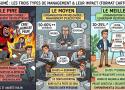
Selon le modèle sociologique de Ron Westrum, trois grands écosystèmes se partagent le monde du travail :
1️⃣ L’organisation toxique (15 à 20 % en France, ↔️ stable)
⚡️ Le carburant : le pouvoir, la peur et le micro-management.
✳️ Le réflexe : chercher immédiatement un bouc émissaire (« c'est la faute de qui ? »).
✴️ L’impact : une démission sur cinq est directement causée par un supérieur toxique, sur fond d'explosion des arrêts pour burn-out.
2️⃣ L’organisation pathologique / bureaucratique (50 à 60 %, modèle dominant)
⚡️ Le carburant : le culte de la règle, du processus et des silos hiérarchiques.
✳️ Le réflexe : la « politique du parapluie » pour se couvrir à chaque décision. Les managers y passent un tiers de leur temps en reporting et réunions descendantes au lieu d'accompagner les équipes.
✴️ L’impact : selon l'IGAS, 65 % des salariés estiment qu'il y a plus de hiérarchie que de coopération. Résultat : 80 % des collaborateurs refusent aujourd'hui de devenir managers.
3️⃣ L’organisation saine / générative (20 à 25 %, ↗️ en croissance)
⚡️ Le carburant : la sécurité psychologique et le sens de la mission.
✳️ Le réflexe : le droit à l'erreur. Quand un accroc survient, on interroge le système pour progresser collectivement au lieu de sanctionner l'individu.
✴️ L’impact : le manager agit en facilitateur et en bouclier, entraînant un absentéisme en chute libre et un engagement démultiplié.
🇫🇷 Pourquoi la France concentre-t-elle autant de frustrations managériales ?
Deux blocages culturels persistent :
🍎 Le péché originel de la promotion : on nomme encore trop souvent au poste de manager le meilleur profil technique ou le diplôme le plus prestigieux, sans former ni évaluer ses compétences relationnelles.
🫵🏻 La stigmatisation de l’erreur : là où d'autres cultures valorisent l'apprentissage par l'essai et l'ajustement, notre système continue de percevoir l'erreur comme une faute à cacher.
Tant qu'on continuera de considérer le management comme un échelon hiérarchique plutôt que comme un métier de service à part entière, la culture du parapluie restera la norme.
Et vous, dans quel type d'organisation évoluez-vous au quotidien ?
Il y a six mois presque jour pour jour, je quittait d’un poste à responsabilité chez un fournisseur cloud souverain afin d’explorer une idée qui avait fini par m’obséder.
Tous les fournisseurs de cloud existants, que ce soit les hyperscalers (AWS, Azure, GCP, Alibaba Cloud), ou les acteurs locaux/souverains (OVH, Scaleway, Outscale, Cloud Temple, Celeste, etc.), s’appuient sur des principes technologiques qui célèbrent leurs 20 ans cette année.
Le IaaS (Infrastructure as a Service) qui sert de couche de base à l’ensemble des autres services (VM évidements, base de données as a service, Kubernetes managé, API Gateway, Event manager, Function as a service, etc.), s’appuie systématiquement sur trois principes :
- La virtualisation du compute : on découpe un gros serveur en plus petites machines virtuelles,
- La virtualisation du stockage : les disques attachés à ces machines virtuelles proviennent en fait de systèmes de stockage mutualisés auxquels les gros serveurs accèdent via le réseau,
- La virtualisation du réseau : les clients doivent être isolés entre eux (multi-tenant), leurs VMs doivent pouvoir communiquer au sein d’un réseau isolé des autres clients. Cette isolation passe par la construction de réseaux virtuels au-dessus du réseau “physique”.
C’est AWS en 2006 qui a mis en pratique puis théorisé ce type d’architecture.
Bien qu’elle présente des avantages (que je détaillerai), elle n’est pas exempte d’inconvénients (que je vais aussi détailler).
À force de nager dans cet environnement, les limites et inconvénients ont fait naître en moi une frustration grandissante au point de me pousser à quitter mon poste pour répondre à cette question simple : aujourd’hui, 20 ans plus tard, compte tenu des progrès logiciels et matériels, compte tenu de l’évolution dans la façon dont les entreprises consomment le Cloud, y’aurait-il une autre façon de faire ?
Une façon plus efficace, plus performante, moins énergivore et moins coûteuse.
C’est pour tenter d’y répondre que nous avons fondé unStack avec mes deux associés : Tristan et Philippe.
Les limites des principes actuels
Avant d’essayer de répondre à la question, il est important de comprendre pourquoi elle se pose. On pourrait simplement se satisfaire de l’existant considérant qu’il représente une forme de consensus et de standard établi.
Commençons par en détailler un peu les principes et surtout les limites.